


Unlock Energy Independence with a Zero Export Solar System
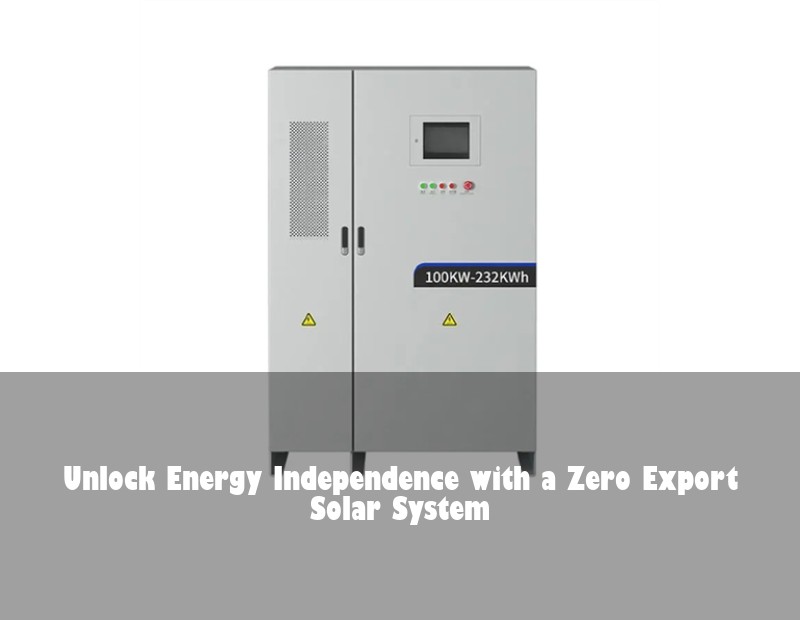
Table of Contents
- The Grid Challenge: Why Solar Export Limits Are Spreading
- What Exactly is a Zero Export Solar System?
- European Drivers: Regulations and Grid Dynamics
- How Zero Export Technology Works: Inverters and Intelligence
- Beyond Compliance: 3 Unexpected Benefits of Zero Export
- Real-World Success: A German Case Study
- The Future of Solar: Is Zero Export Becoming Standard?
The Grid Challenge: Why Solar Export Limits Are Spreading
Your solar panels generate surplus energy on sunny afternoons, but instead of earning feed-in tariffs, you're asked to stop exporting to the grid. Across Europe, from Spain to Sweden, grid operators are implementing zero export solar system requirements. Why? Aging infrastructure struggles with solar intermittency – Germany saw 12% renewable curtailment in 2022 during peak hours (Energy-Charts). This isn't just bureaucracy; it's grid preservation.
What Exactly is a Zero Export Solar System?
A zero export solar system actively prevents surplus energy from feeding into the public grid. Unlike traditional setups, it uses real-time monitoring and dynamic controls to:
- Redirect excess solar to batteries or hot water systems
- Throttle panel output when storage is full
- Maintain 100% self-consumption without export penalties
Think of it as your personal energy ecosystem – designed for independence, not grid dependency.
European Drivers: Regulations and Grid Dynamics
Europe's clean energy transition is hitting grid constraints. In the UK, over 40% of new solar installations now require export limiting (BEIS Data), while Italy's 110% tax rebate explicitly excludes grid-fed systems. Three critical forces are driving zero export adoption:
- Grid Fees: Austria charges €0.015/kWh for exported solar
- Connection Limits:
- France's 6kVA per-phase ceiling
- Netherlands' transformer saturation rules
- Safety Protocols: Anti-islanding requirements during grid outages
How Zero Export Technology Works: Inverters and Intelligence
The magic happens through three integrated components:
- CT Sensors: Monitor grid flow with 99.5% accuracy
- Hybrid Inverters: Devices like SolarEdge's Energy Hub modulate output in 0.5-second cycles
- Algorithms: Predictive adjustment based on weather forecasts and usage patterns
During midday production peaks, the system might prioritize charging your EV rather than throttling panels – turning potential waste into value.
Beyond Compliance: 3 Unexpected Benefits of Zero Export
While compliance is key, users discover hidden advantages:
- Extended Equipment Life: Avoiding grid interactions reduces inverter stress by 18% (Fraunhofer ISE Study)
- Energy Arbitrage: Store midday solar for evening use, bypassing peak tariffs
- Grid-Resilience: Seamless transition to backup power during outages
"It's not just about restrictions – it's about smarter control," notes Emma Richter, a Berlin-based solar installer.
Real-World Success: A German Case Study
Consider the Müller family in Bavaria:
- Challenge: Grid operator denied 8kW system due to local transformer saturation
- Solution: Installed zero export system with 10kWh battery
- Results:
- 98% self-consumption rate
- €1,200 annual savings vs. grid-only power
- Zero export fines despite 4.2MWh annual production
Their secret? Dynamic load shifting – automatically powering heat pumps when solar peaks.
The Future of Solar: Is Zero Export Becoming Standard?
With grid constraints tightening, industry analysts predict 70% of new European solar installations will incorporate export limiting by 2027. The rise of vehicle-to-home (V2H) tech creates fascinating possibilities – could your EV become the ultimate zero export buffer?
 Inquiry
 Online Chat