


Whole Home Solar Generators: Europe's Path to Energy Resilience
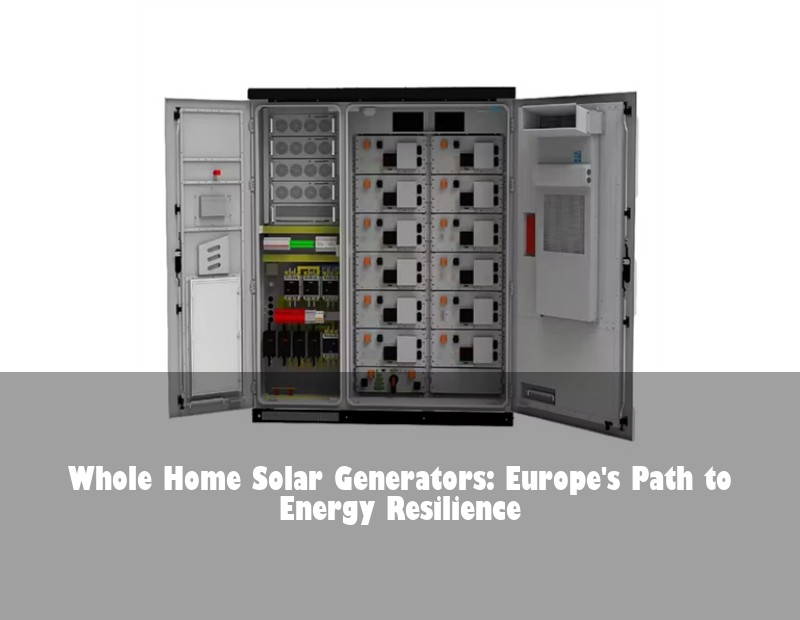
Imagine a winter storm knocks out your power just as dinner simmers on the stove. Across Europe, millions face this reality—but what if your home could seamlessly switch to clean, self-generated electricity? Whole home solar generators aren't just backup systems; they're transformative energy hubs turning sunlight into uninterrupted security. Let's explore how this technology is reshaping European energy independence.
Table of Contents
- Europe's Energy Crossroads: Outages and Costs
- The Data: Why Solar Generators Are No Longer Optional
- Case Study: Germany's Solar-Powered Resilience
- How Whole Home Solar Generators Actually Work
- Beyond Power: Financial and Environmental Returns
- Is Your Home Ready for Energy Autonomy?
Europe's Energy Crossroads: Outages and Costs
Last winter, 200,000 French households shivered through 8-hour blackouts during grid strain. It's symptomatic of a wider pattern: Europe's aging infrastructure meets extreme weather and geopolitical volatility. Three critical challenges emerge:
- Grid vulnerability: 62% of EU distribution networks are over 20 years old
- Price volatility: European electricity prices surged 40% year-over-year in 2023
- Carbon deadlines: 55% emissions reduction target by 2030 demands household-level action
The Data: Why Solar Generators Are No Longer Optional
Consider these European Energy Agency (EEA) findings:
- Average outage duration in Western Europe increased by 28% since 2018
- Solar+battery systems reduce household grid dependence by 60-80%
- Payback periods dropped from 12+ years to 5-7 years due to energy inflation
As grid uncertainty grows, whole home solar generators shift from luxury to strategic necessity—especially with EU building mandates requiring solar readiness in new constructions.
Case Study: Germany's Solar-Powered Resilience
In Bavaria, the Müller family's 2022 installation demonstrates real-world impact:
- System: 14kW solar array + 20kWh lithium battery
- Performance: Survived 3-day grid outage during floods, maintaining critical loads
- Economics: €24,000 investment; €1,800/year savings (7-year ROI)
- Carbon: 4.2-ton annual CO₂ reduction—equivalent to planting 200 trees
Their experience reflects Germany's broader Energiewende transition, where residential battery deployments grew 89% in 2023 according to Fraunhofer ISE.
How Whole Home Solar Generators Actually Work
Unlike portable generators, these integrated systems deliver seamless power through intelligent architecture:
The Four-Pillar Framework
- Solar Array: High-efficiency panels (22%+ conversion rate) capture maximum European daylight
- Hybrid Inverter: Brain of the system, managing AC/DC conversion and grid interaction
- Lithium Storage: 10-20kWh batteries with 6,000+ cycle lifespans
- Energy Manager: AI-driven software prioritizing loads during outages (e.g., fridge > TV)
Real-Time Operation
During normal operation, solar powers your home while charging batteries. When clouds appear, batteries discharge before tapping the grid. During outages—the system isolates within milliseconds, keeping lights on without interruption. Modern systems like SolarEdge even predict weather patterns to pre-charge batteries before storms.
Beyond Power: Financial and Environmental Returns
While backup power is the headline benefit, the hidden advantages redefine value:
The Triple Win
- Economic: UK households with time-of-use tariffs save €1,200/year by avoiding peak pricing
- Ecological: One whole home system offsets 25+ metric tons of CO₂ over 15 years
- Grid Support: Virtual power plant programs (e.g., Octopus Energy) pay €200/year for battery sharing
Consider this: Your system isn't just consuming energy—it's becoming a community asset that stabilizes local grids during demand spikes.
Is Your Home Ready for Energy Autonomy?
We've moved beyond the era of diesel generators and their fumes, noise, and maintenance. Modern whole home solar generators offer silent, zero-emission security that pays for itself. But the real question isn't about technology—it's about priorities. How much is uninterrupted power worth to your family during the next extreme weather event? And what legacy of energy responsibility do you want to build for future generations?
 Inquiry
 Online Chat