


Unlock True Energy Freedom with a Stand Alone Off Grid System
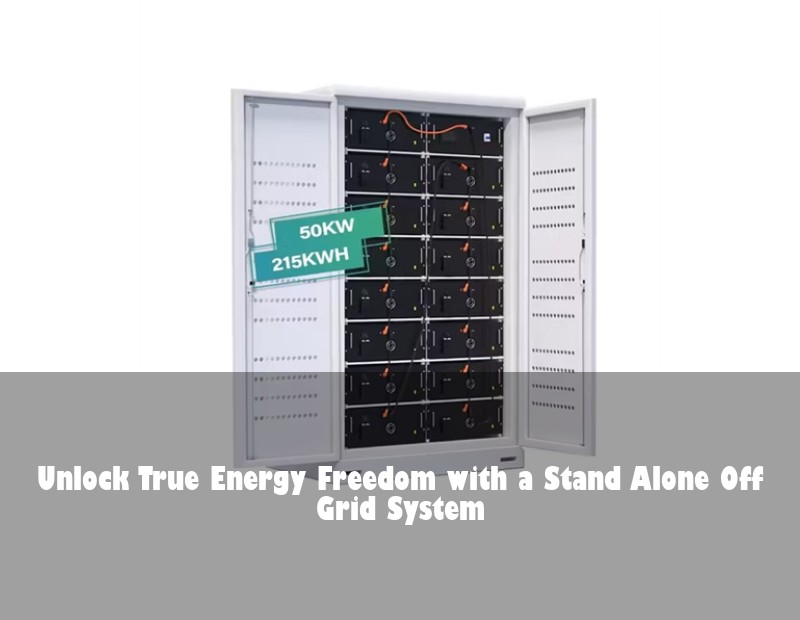
Imagine powering your home entirely independent of utility grids—no blackouts, no rising tariffs. Across Europe, homeowners and businesses are turning to stand alone off grid systems as a sustainable solution. This comprehensive guide explores why these self-sufficient energy setups are transforming energy access from the Scottish Highlands to Mediterranean islands.
Table of Contents
- Europe's Silent Energy Crisis: Why Off-Grid Matters
- Anatomy of a Stand Alone Off Grid System
- Smart Sizing: Your Key to Off-Grid Success
- Real-World Case: A Greek Island's Energy Transformation
- The Off-Grid Evolution: Emerging Technologies
- Is an Off-Grid System Right for Your Needs?
Europe's Silent Energy Crisis: Why Off-Grid Matters
Europe faces a paradoxical energy challenge: while renewable capacity grows, grid instability persists. In 2023, the EU experienced 12% more grid outages than pre-pandemic levels, with remote areas worst affected. Farmers in Portugal's Alentejo region, for instance, lost €8,000/month during peak harvest due to unreliable power. This vulnerability sparks demand for truly autonomous energy solutions.
Anatomy of a Stand Alone Off Grid System
Unlike grid-tied hybrids, a true stand-alone system operates in complete isolation. Core components include:
- Solar Arrays (20-30% oversized for seasonal variations)
- Intelligent Battery Banks (Lithium-ion now 90% of new installations)
- Multi-Stage Inverters with grid-forming capability
- Backup Generators (biofuel-compatible for EU sustainability goals)
Modern systems like Solar Pro's Independence Series integrate AI-driven forecasting, dynamically adjusting loads during cloudy spells—crucial for Scandinavia's light fluctuations.
Smart Sizing: Your Key to Off-Grid Success
Undersizing leads to winter blackouts; oversizing wastes resources. Follow this proven approach:
- Calculate worst-case daily consumption (e.g., 15kWh for a 3-bedroom home)
- Multiply by autonomy days (5-7 days in Central Europe)
- Add 25% buffer for battery degradation
A Swiss chalet project used this method to achieve 99.98% reliability despite 2-meter snow loads—critical when avalanche risks block generator refuels.
Real-World Case: A Greek Island's Energy Transformation
Consider Astypalaia Island, where diesel generators once provided costly, noisy power (€0.45/kWh). In 2022, a 120kW off-grid microgrid was deployed:
- Components: 340 solar panels + 800kWh Tesla batteries + 2 biodiesel generators
- Results: €220,000 annual savings, 340 tons CO2 reduction
- Reliability: Zero outages during 2023 Mediterranean heatwaves
This project, verified by the International Renewable Energy Agency, proves off-grid viability even for community-scale applications.
The Off-Grid Evolution: Emerging Technologies
Stand-alone systems are becoming smarter and more adaptable:
- Hydrogen Hybrids: Excess solar converts to hydrogen for winter use (pilot in Norway's Svalbard)
- Blockchain Trading: Neighbors exchange surplus via peer-to-peer networks
- AI Optimization: Systems like Solar Pro's GridBreaker predict consumption 96 hours ahead using weather APIs
According to IEA reports, these innovations could reduce battery costs by 40% by 2030—making off-grid accessible to 5 million more EU households.
Is an Off-Grid System Right for Your Needs?
While liberating, stand-alone systems require honest assessment:
- Ideal For: Remote farms • Mountain lodges • Eco-resorts • Grid-unstable regions
- Challenges: Higher upfront cost (€20,000-€50,000) • Technical maintenance
Spain's off-grid specialists at ACCIONA recommend a phased approach: start with critical loads (fridges/well pumps), then expand. What energy-independent dream could your property achieve with 365-day reliability?
Ready to explore your off-grid potential? Calculate your energy independence score with our interactive sizing tool—or share your biggest energy resilience challenge below!
 Inquiry
 Online Chat