


Solar Powered Watering System: The Future of Sustainable Agriculture
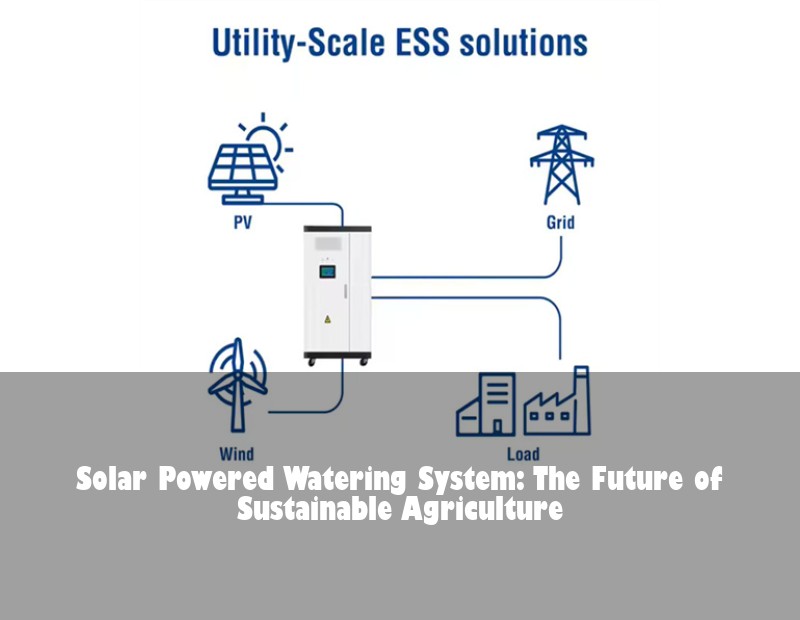
Table of Contents
- The Global Water Crisis & Rising Energy Costs
- How Solar Powered Watering Systems Actually Work
- Real Results: Spanish Vineyard Case Study
- The Economic Advantage You Can't Ignore
- Beyond Basic Irrigation: The Smart Technology Shift
- Myth Busting Solar Irrigation Misconceptions
- Your Next Move Toward Sustainable Irrigation
The Global Water Crisis & Rising Energy Costs
Imagine seeing 40% of your farm's operating costs vanish overnight. That's the reality European farmers face when traditional irrigation meets solar innovation. With agriculture consuming 70% of global freshwater and energy prices soaring by 300% in some regions since 2021, the solar powered watering system isn't just eco-friendly - it's economic survival. As climate patterns disrupt growing seasons, these systems provide water security without grid dependency. Ever wondered how olive groves in Greece or vineyards in France maintain yield during droughts? The answer often starts with photovoltaic panels.
How Solar Powered Watering Systems Actually Work
At its core, a modern solar watering system transforms sunlight into precise hydration through three key components:
The Energy Harvest Layer
High-efficiency monocrystalline panels (22%+ efficiency) capture sunlight, often mounted on rotating trackers that boost yield by 30% compared to fixed systems. Unlike early solar tech, today's panels generate power even under diffuse light - crucial for Europe's variable climates.
Intelligent Control Hub
The brain of the operation features:
- Weather-responsive algorithms adjusting flow based on humidity forecasts
- Battery storage for 24/7 operation (lithium-ion now dominates lead-acid)
- Remote monitoring via IoT sensors
Precision Delivery System
DC-powered pumps push water through drip lines or sprinklers at optimal pressure, with flow rates precisely calibrated to soil moisture readings. The magic? Zero grid connection required.
Real Results: Spanish Vineyard Case Study
Consider Bodegas Tempore vineyard in Rioja, Spain - a region experiencing 30% more drought days annually since 2015. After installing a 5.2kW solar watering system in 2022:
- Energy costs dropped 92% (from €3,800 to €300 annually)
- Water usage decreased by 35% through precision scheduling
- CO₂ emissions reduced by 8.2 tons/year
- Payback achieved in 3.2 years with EU agricultural grants
"Our grapes now reach optimal brix levels consistently, even during heatwaves," notes vineyard manager Elena Morales. "The system self-adjusts to microclimate changes we'd miss manually."
The Economic Advantage You Can't Ignore
While environmental benefits grab headlines, the financial case proves equally compelling. Let's break down the numbers:
Upfront vs. Lifetime Costs
A typical 4-hectare installation costs €12,000-€18,000. But factor in:
- 20-25 year panel lifespan with minimal degradation
- €0.03/kWh operational cost vs. €0.28/kWh grid average in Germany
- Exemption from carbon taxes in France and Italy
Hidden Value Drivers
Beyond direct savings, solar irrigation delivers:
- Increased land value (certified sustainable farms command 15% premiums)
- Drought resilience insurance through water independence
- Compatibility with EU CAP subsidies for green infrastructure
Beyond Basic Irrigation: The Smart Technology Shift
The latest systems integrate game-changing features that would impress even tech skeptics:
Predictive Water Management
Machine learning algorithms analyze historical yield data, satellite imagery, and real-time soil sensors to:
- Forecast water needs 72 hours in advance
- Prevent overwatering during unexpected rainfall
- Optimize nutrient delivery timing
Hybrid Resilience Models
During Portugal's 2023 wildfires, Quinta do Vale's solar/battery system maintained irrigation when grid power failed for 8 days. Their secret? Modular design allowing:
- Generator integration for extreme scenarios
- Scalable battery storage (5kWh to 50kWh+)
- Peer-to-peer energy sharing between neighboring farms
Myth Busting Solar Irrigation Misconceptions
Let's address common concerns head-on:
"Northern Europe lacks sufficient sunlight"
Modern panels generate power at irradiance levels as low as 100W/m² - easily achieved even in Scotland. Germany, with solar capacity exceeding 82GW, proves viability at 48°N latitude.
"Maintenance is complicated"
Sealed brushless DC pumps require less servicing than AC alternatives. Remote diagnostics predict issues before failure - a Danish strawberry farm reduced maintenance visits by 70% using this feature.
"Batteries won't last"
Lithium-iron-phosphate (LFP) batteries now offer 6,000+ cycles with 80% capacity retention. That's 15+ years of daily use - outlasting most pumps.
Your Next Move Toward Sustainable Irrigation
As you evaluate your water management strategy, consider this: What would 100% energy-independent irrigation do for your operational resilience? The technology exists to make your farm both ecologically regenerative and economically robust. Why wait for the next drought or energy price spike to take control? Which crop in your rotation would benefit most from solar-powered precision watering today?
 Inquiry
 Online Chat