


Solar Battery Bank Set Up: Your Key to Energy Freedom
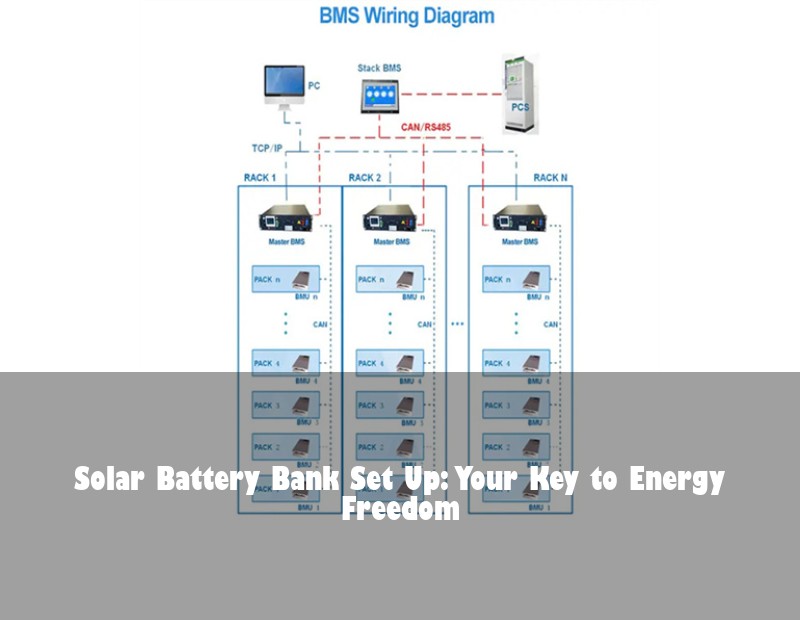
Table of Contents
Why Solar Battery Banks Are Essential Today
Ever felt that pang of frustration when your solar panels generate excess energy at noon, only to watch it vanish into the grid while paying peak rates at night? Europe's energy crisis has made this pain point undeniable. In 2023, average EU electricity prices hit €0.28/kWh - that's 40% higher than pre-pandemic levels according to Eurostat. This volatility isn't just annoying; it's financially draining. A proper solar battery bank set up transforms passive consumption into active control.
The Energy Independence Paradox
Many homeowners install solar expecting full autonomy, only to discover they still rely on the grid when clouds gather or sunsets arrive. That's where battery systems become game-changers. By storing your excess solar energy instead of exporting it at low feed-in tariffs, you create a personal energy reservoir available 24/7.
Key Components of a Solar Battery Bank System
Designing an efficient system requires understanding these core elements:
- Battery Chemistry: Lithium-ion (like Tesla Powerwall) dominates for its 90% efficiency and 10+ year lifespan
- Hybrid Inverters: The brain that manages solar charging, grid interaction, and backup power switching
- Battery Management System (BMS): Protects against overcharging and deep discharge
- Monitoring Software: Real-time tracking via apps like SolarEdge or SonnenCommunity
Critical Technical Parameters
When selecting batteries, consider these metrics:
- Depth of Discharge (DoD): Aim for 90%+ to maximize usable capacity
- Round-Trip Efficiency: Top systems exceed 94% (minimal energy loss)
- Scalability: Modular systems allow future expansion
Step-by-Step Solar Battery Bank Set Up Guide
Installing a robust system involves careful planning:
Phase 1: Pre-Installation Preparation
- Calculate your energy consumption patterns using tools like EnergyStats
- Conduct a site assessment for optimal battery placement
- Select battery type based on climate (temperature affects performance)
Phase 2: Installation Process
Proper installation ensures safety and efficiency:
- Mount batteries in well-ventilated areas away from living spaces
- Implement DC/AC disconnects within 1.5m of batteries per IEC 60364 standards
- Use torque wrenches for terminal connections to prevent arcing
Phase 3: Commissioning & Testing
Never skip these critical steps:
- Perform insulation resistance tests (>1MΩ)
- Validate communication between inverters and BMS
- Simulate grid failures to test backup functionality
Real-World Case Study: A German Household Transformation
The Müller family in Bavaria demonstrates how strategic battery setup delivers results:
The Challenge
With 8kW solar panels generating excess daytime energy, they exported 61% to the grid at €0.08/kWh while buying nighttime electricity at €0.32/kWh. Their annual net electricity cost? €1,240 despite having solar.
The Solution
In 2022, they installed a 13.5kWh Tesla Powerwall with Smart Backup integration:
- Total system cost: €9,800 after €3,200 KfW subsidy
- Installation completed in 6 hours by certified technicians
The Results
- Grid dependence reduced from 64% to 18%
- Annual savings: €1,022 (payback in <8 years)
- Backup power during 2023 winter storm blackouts
"Our battery becomes our energy fortress during outages," says homeowner Klaus Müller. "Knowing we're protected while saving money? That's priceless."
Expert Insights: Maximizing Your Battery Investment
Based on our decade of field experience across Europe:
Battery Selection Secrets
Not all batteries handle European climates equally. Cold northern regions? Opt for lithium ferrophosphate (LFP) chemistry that maintains >95% capacity at -10°C. Mediterranean homes? NMC batteries offer higher energy density in limited spaces.
Intelligent Energy Management
Modern systems like sonnenCommunity turn your battery into a grid-balancing asset. By participating in virtual power plants, German users earn €200+/year by allowing minute grid-stabilization discharges.
Avoiding Costly Mistakes
- Pitfall: Oversizing batteries beyond solar production capacity
- Solution: Match storage to daily surplus (typically 30-70% of array size)
- Pitfall: Ignoring thermal management in garages or attics
- Solution: Maintain batteries at 15-25°C for optimal lifespan
Future-Proofing Your Investment
With Vehicle-to-Home (V2H) technology emerging, ensure your inverter supports bidirectional charging. The upcoming EU Battery Directive 2027 will mandate recycled content - choose manufacturers like CATL already meeting these standards.
 Inquiry
 Online Chat