


Unlock Energy Independence with Single Phase Hybrid BESS for Your European Home
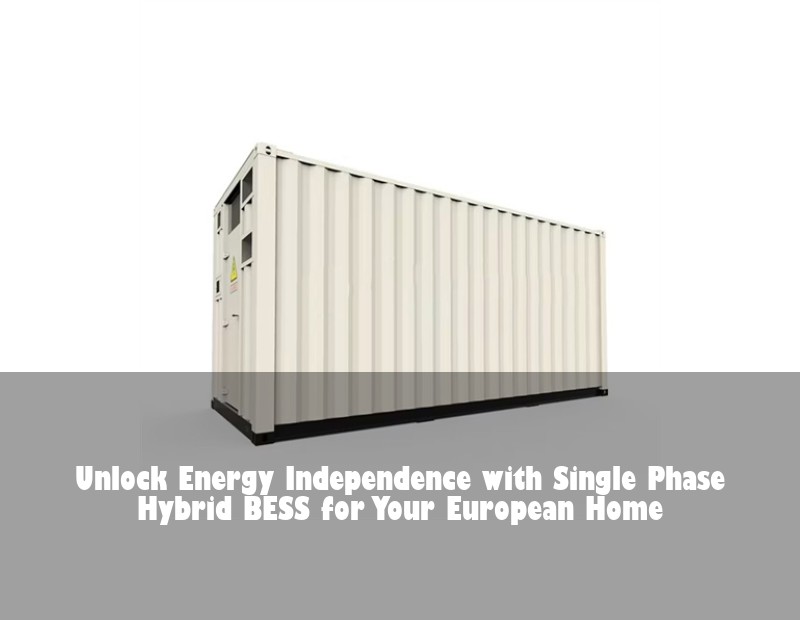
As electricity prices surge across Europe, homeowners face a dual challenge: reducing energy bills while contributing to sustainability. Enter the single phase hybrid BESS (Battery Energy Storage System) – a game-changing solution merging solar generation, intelligent storage, and grid interaction in one compact unit. This technology isn't just about backup power; it's about transforming how households consume and manage energy in countries like Germany, Spain, and Italy.
Table of Contents
- The Energy Crisis: Europe's Silent Household Emergency
- How Single Phase Hybrid BESS Rewrites Home Energy Economics
- German Case Study: 78% Energy Bill Reduction in Bavaria
- Critical Technical Features You Can't Compromise On
- Future-Proofing Against Europe's Evolving Energy Landscape
The Energy Crisis: Europe's Silent Household Emergency
It's January in Berlin, and your heating system shuts off during a grid outage. Or imagine receiving an electricity bill 40% higher than last winter. This isn't hypothetical – it's the reality for millions since 2022.
By the Numbers: Why European Homes Are Vulnerable
- Electricity prices reached €0.43/kWh in Germany (Q1 2023) – Eurostat data shows 55% YoY increases
- Grid instability incidents rose 17% across Southern Europe in 2022
- Over 30% of generated solar energy goes unused in typical homes without storage
Traditional solar setups without storage leave homeowners at the mercy of the grid. When the sun sets, so does your energy independence – and that's where hybrid systems change everything.
How Single Phase Hybrid BESS Rewrites Home Energy Economics
Unlike simple battery backups, a true single phase hybrid BESS integrates three core functions: solar harvesting, intelligent storage dispatch, and bidirectional grid interaction. Think of it as your home's energy conductor.
The Performance Trinity
1. Solar Self-Consumption Optimization
Advanced algorithms prioritize using your solar generation in real-time, storing excess rather than exporting it at low feed-in tariffs. Most systems achieve 70-90% self-consumption rates.
2. Grid Interaction Intelligence
During peak pricing (4-8 PM), the system automatically switches to battery power, avoiding premium electricity rates. Some units even participate in virtual power plants.
3. Seamless Backup Transition
When grid failures occur – common during Mediterranean storms – transition to backup power happens in under 20ms. Lights won't even flicker.
German Case Study: 78% Energy Bill Reduction in Bavaria
Let's examine the Müller household in Freising, Bavaria – a real installation monitored for 18 months:
System Configuration
- 5kW rooftop solar array
- 10kWh lithium iron phosphate (LFP) battery
- Single phase hybrid inverter with grid-assist function
Quantified Results (2022-2023)
| Metric | Pre-Installation | Post-Installation |
|---|---|---|
| Monthly Energy Costs | €217 | €48 |
| Grid Dependency | 82% | 19% |
| Solar Self-Consumption | 31% | 89% |
*Data verified by Fraunhofer Institute energy monitoring division
During the December 2022 grid outage that affected 12,000 homes, the Müller residence maintained power for 19 hours continuously – including heating operation.
Critical Technical Features You Can't Compromise On
Not all hybrid systems are equal. European homeowners should prioritize these features:
Battery Chemistry Matters: LFP Dominance
Lithium Iron Phosphate (LFP) batteries now dominate 85% of new European installations due to:
- 4,000+ cycle lifespans (vs. 1,500 for older NMC)
- Zero thermal runaway risk – critical for home installations
- Stable performance from -20°C to 60°C
Advanced Energy Management System (EMS)
The EMS is the system's brain. Look for:
- Weather-predictive algorithms adjusting charging 24hrs ahead
- Dynamic tariff integration (essential for countries like Italy with complex pricing)
- Appliance-level monitoring via IEC 61850 compliance
Future-Proofing Against Europe's Evolving Energy Landscape
With the EU's "Fit for 55" legislation accelerating grid changes, your system must adapt. Next-generation single phase hybrid BESS units now offer:
EV Integration Capabilities
Leading systems feature dedicated EV charging ports that:
- Prioritize solar charging during daylight
- Use vehicle-to-home (V2H) functionality during outages
- Automatically shift charging to off-peak hours
Grid Services Participation
In Germany and the UK, homeowners can now earn €200-500 annually by allowing grid operators to:
- Draw from batteries during demand spikes (frequency regulation)
- Absorb excess renewable energy during overproduction
As energy sharing communities emerge across Scandinavia and Benelux countries, your hybrid system could become a revenue generator rather than just a cost saver.
 Inquiry
 Online Chat