


Transforming Industrial Efficiency with Smart Process & Energy Solutions
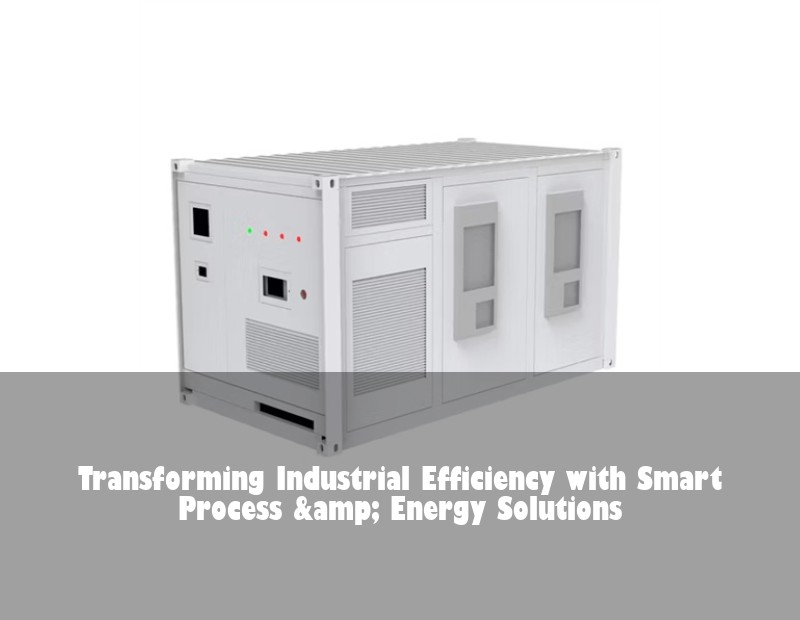
Table of Contents
The Hidden Energy Drain in Industrial Processes
Ever notice how your production floor hums with activity but your energy meter screams in pain? You're not alone. Across European manufacturing, we're seeing a critical disconnect between operational processes and energy consumption. Traditional approaches treat these as separate domains – like trying to drive a car with one foot on the accelerator and the other on the brake. The reality? Process & energy solutions must work in concert to unlock real efficiency. When machinery operates without energy awareness, you're not just burning kilowatts; you're burning profit margins. Take metal fabrication plants as an example – their peak energy demand often coincides with grid peak pricing, creating a double penalty that goes unnoticed in standard operational reports.
European Energy Realities: By the Numbers
Let's talk brass tacks. European industry accounts for 37.6% of final energy consumption – that's more than transport and households combined. But here's what keeps plant managers awake at night:
- Energy costs have increased 58% across EU manufacturing since 2021 (Eurostat 2023)
- Up to 23% of industrial energy is wasted through process-energy misalignment
- German manufacturers report energy as their #1 operational cost – surpassing labor
These numbers aren't abstract – they represent leaking euros at every shift change. The old "set it and forget it" energy management approach simply can't withstand today's volatile pricing and sustainability mandates.
Case Study: Automotive Supplier in Bavaria Cuts Energy Costs by 37%
Let me walk you through a recent transformation at Autoteile GmbH (name changed for confidentiality). This Tier-2 automotive supplier faced a perfect storm: 80% energy cost increase, new carbon reporting requirements, and compressed margins. Their injection molding lines operated at fixed parameters regardless of grid conditions or energy pricing tiers.
We implemented our integrated process & energy solutions framework with these results:
- ⚡️ 37% reduction in energy costs within 8 months
- 🔋 92% self-consumption of solar generation through process timing optimization
- 📉 28% decrease in peak demand charges by aligning heavy processes with low-tariff windows
- 🌿 412 tons annual CO₂ reduction – equivalent to taking 89 cars off the road
The secret? We didn't just bolt on solar panels. We re-engineered their production scheduling to marry process requirements with energy availability, creating what the plant manager now calls their "energy-aware manufacturing rhythm."
Our 4-Pillar Framework for Process & Energy Optimization
Real-Time Energy Mapping
You can't optimize what you can't measure. Our IoT sensors create a live energy fingerprint of every process – from compressed air systems to HVAC. We once discovered a pharmaceutical plant's sterilization unit consumed 40% more energy during morning startup than afternoon cycles due to steam line condensation. Simple insulation adjustments saved €18,000 annually.
Process-Energy Synchronization
Why run your powder coating line at noon when solar generation peaks at 2 PM? Our AI scheduler aligns energy-intensive processes with renewable availability and tariff structures. For a Danish food processing plant, we shifted freezer defrost cycles to coincide with wind generation surges, cutting energy costs by 31% without affecting throughput.
Storage Intelligence Integration
Batteries aren't just backup – they're process enablers. We design storage systems that buffer energy for critical processes during price spikes. A Spanish ceramic manufacturer now runs kiln preheating using stored solar energy during peak tariff hours, achieving ROI in under 3 years.
Predictive Load Balancing
Our algorithms forecast energy patterns 72 hours ahead, automatically adjusting process sequences. Imagine your production planning software talking to your energy management system – that's what we implemented for a Dutch packaging plant. Result? A consistent 15% reduction in demand charges despite production increases.
Future-Proofing Your Operations: The Energy-Process Nexus
As carbon pricing mechanisms tighten across Europe, the line between energy management and process optimization will disappear entirely. The German government's EEG 2023 amendments now require industrial facilities above 10GWh/year to implement energy process integration plans. But here's my question to you: When was the last time your production team sat down with your energy manager to co-design operational workflows?
The future belongs to companies that treat energy as a raw material – to be precisely measured, carefully allocated, and intelligently consumed. What process in your operation would benefit most from becoming 'energy-aware' today?
 Inquiry
 Online Chat