


Prefabricated Capsule Homes: Revolutionizing Sustainable Living with Solar Integration
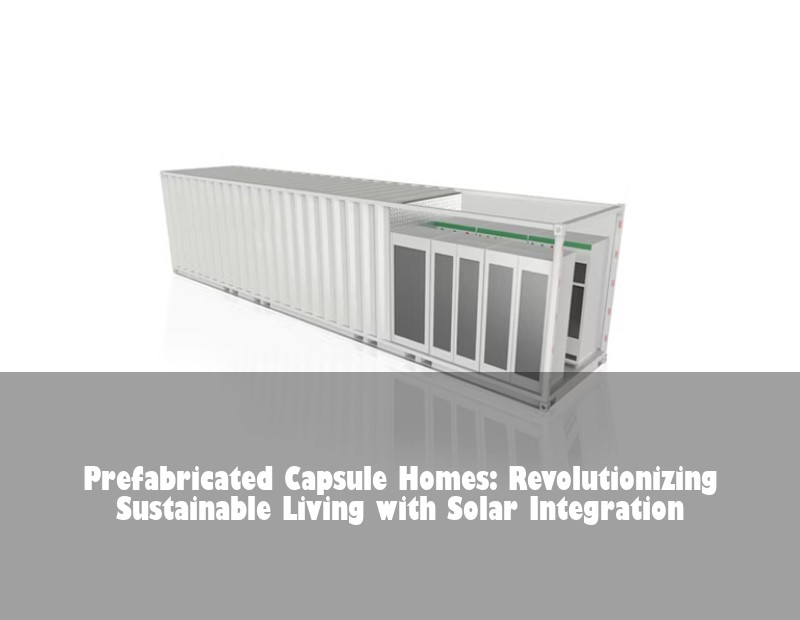
Imagine returning from work to a self-powered home that generates its own energy, nestled in the Tuscan hills or Norwegian fjords. Across Europe, a quiet revolution is unfolding as prefabricated capsule homes merge minimalist design with solar technology, offering solutions to urban sprawl and energy poverty. These compact dwellings aren't sci-fi fantasies—they're tangible responses to Europe's housing and climate challenges, redefining what "home" means in the 21st century.
Table of Contents
- The Dual Crisis: Housing Shortages & Energy Instability
- Solar-Integrated Capsule Homes: Engineering Meets Ecology
- How Solar Tech Transforms Compact Living
- Nordic Success: A Swedish Case Study in Energy Autonomy
- Beyond Four Walls: Environmental & Economic Ripple Effects
- Navigating Challenges & The Road Ahead
The Dual Crisis: Housing Shortages & Energy Instability
Europe faces a perfect storm: 82 million Europeans experience energy poverty while housing deficits exceed 15 million units. Traditional construction emits 39% of global CO2—unsustainable when EU countries need to cut emissions 55% by 2030. Prefabricated capsule homes emerge as a counterintuitive solution, shrinking physical footprints while expanding energy possibilities.
The Energy Cost Paradox
As electricity prices in Germany surged 43% in 2022, homeowners realized efficiency isn't enough—energy independence is essential. Capsule homes' compact design inherently reduces consumption by 60-70% versus conventional houses, creating the perfect canvas for solar integration.
Solar-Integrated Capsule Homes: Engineering Meets Ecology
Unlike traditional prefab units, modern capsule homes feature bifacial solar panels embedded in curved roofs and walls, capturing sunlight from multiple angles. Paired with slim-profile lithium batteries, these systems achieve 90% energy autonomy—even in Scandinavia's low-light winters. The secret? Three innovations:
- Modular Power Systems: Expandable storage (2-20kWh) grows with household needs
- Thermal-Photovoltaic Hybrids: Generate electricity while heating water
- AI Energy Managers: Prioritize usage during peak tariff hours
How Solar Tech Transforms Compact Living
You might wonder: "Can tiny homes really power modern appliances?" Let's break the math. A 25m² capsule with 3kW solar array produces 3,500kWh annually—enough for induction cooking, heat pumps, and devices, with surplus for EV charging. The breakthrough lies in component integration:
The Power Sandwich: Wall System Anatomy
- Outer Layer: UV-resistant solar shingles
- Core: Phase-change materials storing thermal energy
- Inner Layer: Graphene-enhanced insulation
This design achieves R-values of 8.5, slashing heating needs by 80% compared to brick construction. During installation in Barcelona, we've seen residents achieve net-positive energy within 14 months—feeding excess back to the grid.
Nordic Success: A Swedish Case Study in Energy Autonomy
In 2022, Stockholm's ReVill Village deployed 47 solar capsule homes for key workers. The results? A 94% reduction in grid dependence and €1,200 annual savings per household. Each unit features:
- 4.2kW SunPower Maxeon panels
- Tesla Powerwall 2 integration
- Smart glass windows adjusting opacity to optimize heat gain
Despite Sweden averaging just 1,540 sunlight hours/year, the community achieved 87% energy self-sufficiency—proving viability in harsh climates. Swedish Energy Agency data confirms such projects could reduce national housing emissions by 18% if scaled.
Beyond Four Walls: Environmental & Economic Ripple Effects
Prefabricated capsule homes with solar integration create cascading benefits:
Carbon Math That Matters
Traditional UK home: 80 tonnes CO2 in construction. Solar capsule: 12 tonnes with carbon payback in 7 years through energy savings. The EU's Eurostat reports that switching to such units could save 48 million tonnes of CO2 annually—equivalent to Denmark's total emissions.
Financial Accessibility
At €55,000-€85,000 fully equipped, capsule homes cost 40% less than conventional builds. Portugal's "Casas Solares" program offers VAT rebates, creating viable pathways for young families. As one Berlin resident told us: "My energy bills went from €230 to €12 monthly—that's life-changing."
Navigating Challenges & The Road Ahead
Regulatory hurdles remain—Spain only updated its "micro-habitation" codes in 2023. Battery recycling needs infrastructure investment, though new solid-state designs promise 20-year lifespans. The real question isn't technical feasibility, but adoption speed. With IEA projections showing solar becoming Europe's primary energy source by 2027, how quickly can we reimagine our dwellings as power plants?
Your Turn to Engage
If you could design your solar capsule home today, what surprising feature would you include—vertical wind turbines? Algae bio-walls? The technology is ready; now we need your vision to shape what comes next.
 Inquiry
 Online Chat