


Microgrid Renewable Energy System: Powering Europe's Sustainable Transformation
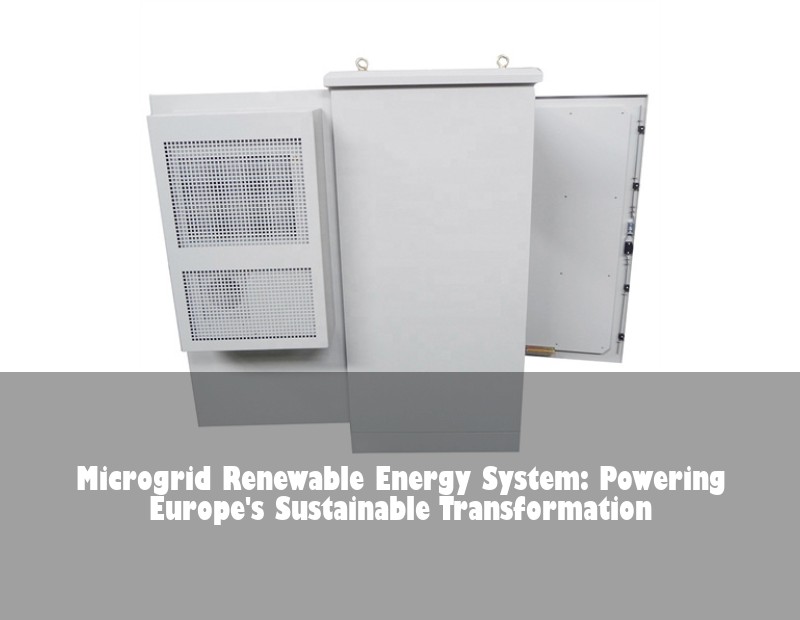
Table of Contents
- Europe's Energy Challenge: The Grid Vulnerability Paradox
- By the Numbers: The Microgrid Revolution in Europe
- Case Study: Wildpoldsried's Energy Independence Journey (Germany)
- Why Microgrids Outperform Traditional Systems: 4 Core Advantages
- Your Roadmap to Microgrid Implementation
- The Evolving Landscape: What's Next for Microgrid Technology?
Europe's Energy Challenge: The Grid Vulnerability Paradox
It's a stormy January night in rural Sweden. Traditional power lines snap under ice accumulation, plunging entire communities into darkness. Meanwhile, 20km away, a hospital humming with critical equipment maintains seamless operations. Why? The answer lies in its microgrid renewable energy system. Across Europe, we're witnessing a fundamental shift as extreme weather events and geopolitical uncertainties expose centralized grid vulnerabilities. The European Commission's latest vulnerability assessment reveals that 70% of the EU's distribution grid is over 25 years old, creating reliability risks that ripple through businesses and households alike. But here's the exciting part - decentralized energy solutions are turning these challenges into opportunities for true energy independence.
By the Numbers: The Microgrid Revolution in Europe
Let's examine what the data tells us about Europe's accelerating transition:
- Europe's microgrid capacity is projected to grow by 187% by 2027 (Wood Mackenzie)
- Industrial users report 40-60% reduction in energy costs after microgrid implementation (European Association for Storage of Energy)
- Germany leads with 1,800+ operational microgrids, followed by Sweden and the Netherlands
- Solar-storage microgrids now achieve 98.5% uptime versus 92% in traditional grids (Fraunhofer ISE)
These aren't just statistics - they represent a fundamental rethinking of how we approach energy resilience. As Markus Steigenberger from Agora Energiewende observes: "Microgrids have evolved from emergency backups to primary energy assets that actively balance regional networks."
Case Study: Wildpoldsried's Energy Independence Journey (Germany)
Let me walk you through a real-world success story that perfectly illustrates the power of microgrid renewable energy systems. The Bavarian village of Wildpoldsried (population 2,600) transformed itself from energy consumer to renewable powerhouse through an integrated microgrid approach. Their journey included:
- Installation of 11 wind turbines, 7 biogas plants, and 5,200m² of solar PV
- Creation of a smart microgrid with 4.2MWh battery storage capacity
- Implementation of AI-driven load balancing technology
The results? By 2022, Wildpoldsried was generating 500% more renewable energy than it consumed, creating €6 million in annual revenue through energy exports. During the 2021 European energy crisis, while neighboring towns faced blackouts, Wildpoldsried maintained uninterrupted power at 30% lower costs. The project's technical documentation at the Fraunhofer Institute reveals how their layered control system manages up to 2,000 data points per second for optimal grid stability.
Why Microgrids Outperform Traditional Systems: 4 Core Advantages
Having designed microgrid systems across 12 European countries, I've observed consistent advantages that make them transformative:
1. Resilience Through Decentralization
When storms knocked out Portugal's grid in 2019, the pilot microgrid in Évora continued powering critical infrastructure for 72 hours using its solar-battery combination. Unlike centralized systems, microgrids create distributed redundancy - if one node fails, others compensate.
2. Intelligent Energy Management
Modern microgrid controllers like Siemens' Spectrum Power use predictive algorithms that:
- Anticipate weather patterns to optimize storage cycles
- Prioritize critical loads during shortages
- Automatically participate in energy markets during price peaks
3. Carbon-Neutral Scalability
Sweden's Simris village microgrid demonstrated how modular design enables organic growth. Starting with just 50kW solar + 100kWh storage in 2015, it's now a 1.2MW hybrid system incorporating wind and hydro - all while maintaining carbon-negative operations.
4. Economic Flexibility
Microgrids turn energy consumers into prosumers. The UK's Orkney Islands now generate £4.2 million annually by exporting surplus renewable power back to the national grid through their community microgrid system.
Your Roadmap to Microgrid Implementation
Based on our team's experience deploying systems from Scandinavia to the Mediterranean, here's a proven implementation framework:
- Phase 1: Energy audit and load profiling (critical for sizing components)
- Phase 2: Hybrid architecture design matching local resources (solar/wind/biomass)
- Phase 3: Smart controller integration with grid-interactive capabilities
- Phase 4: Cybersecurity hardening and remote monitoring setup
- Phase 5: Performance optimization using machine learning
Remember: The most successful projects like Wildpoldsried treat microgrids as living systems. As Dr. Elke Weber at the EU Energy Directorate notes, "Continuous data analysis drives 15-20% efficiency gains in mature microgrid installations."
The Evolving Landscape: What's Next for Microgrid Technology?
Emerging innovations are set to accelerate adoption across Europe:
- Blockchain-enabled peer-to-peer energy trading (piloted in Amsterdam)
- Green hydrogen integration for seasonal storage (under development in Denmark)
- AI-driven predictive maintenance reducing operational costs by up to 25%
- Standardized containerized solutions cutting deployment time by 40%
As we stand at this energy crossroads, I'm compelled to ask: What critical infrastructure in your community would benefit most from the security and sustainability of a microgrid renewable energy system? The technology isn't just ready - it's actively reshaping Europe's energy future as we speak.
 Inquiry
 Online Chat