


Micro CHP Systems for Residential Applications: Powering European Homes Efficiently
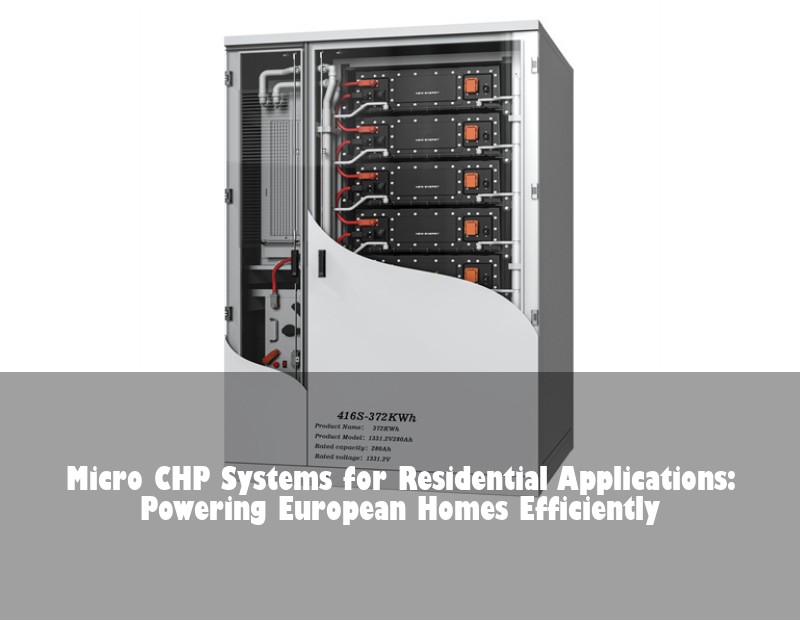
As European homeowners face soaring energy bills and climate pressures, a quiet revolution is unfolding in basements across Germany, the UK, and Scandinavia. Micro Combined Heat and Power (CHP) systems for residential applications are transforming how families generate energy – turning ordinary homes into mini power plants. Imagine your boiler not just heating water but also producing electricity while you cook dinner. This isn't futuristic tech; it's available today, and it's redefining energy independence across European communities.
Table of Contents
Europe's Home Energy Crisis: More Than Just Rising Bills
It's January in Munich, and the Schmitt family watches their thermostat like a ticking meter – because it is. European households now spend up to 62% more on energy than five years ago (Eurostat), while grid reliability concerns grow. But here's what most miss: conventional heating wastes 40-50% of fuel's potential energy. That's like pouring two liters of petrol down the drain for every five you buy. Why? Because traditional boilers discard the electricity-generation potential in your fuel. This inefficiency isn't just costly; it's environmentally reckless in an era of climate urgency.
How Micro CHP Systems Work: Engineering Simplicity
At its core, micro CHP applies a beautiful principle: use twice, waste nothing. While heating your home, it simultaneously generates electricity through these key components:
- Prime Mover (Stirling engine or fuel cell): Converts fuel into mechanical energy
- Generator: Transforms mechanical energy into electricity
- Heat Recovery Unit: Captures excess heat for water/space heating
- Smart Controller: Optimizes energy flow based on household demand
The Efficiency Breakthrough
Consider the data: Where standard boilers operate at 70-90% thermal efficiency, micro CHP systems achieve over 95% total efficiency by utilizing both heat and electricity. For every 100 units of natural gas or biogas input:
- 60-70 units become heat
- 20-30 units become electricity
- Just 5 units are lost
This explains why the UK's Energy Saving Trust calls CHP "the most energy-efficient way to convert fuel into power".
Real Results: A German Family's Energy Transformation
Let's visit the Hoffmann residence near Frankfurt – a real-world example of residential micro CHP impact. Facing €3,200 annual energy costs, they installed a 1 kW Viessmann Vitovalor PT2 fuel cell CHP unit in 2022. The results after 18 months?
- ✅ Energy bills reduced by 58% (€1,856 saved annually)
- ✅ 4.2 tons of CO2 eliminated – equivalent to planting 200 trees
- ✅ 83% self-sufficiency in electricity during winter months
"The system even powers our electric car during peak generation," notes Klaus Hoffmann. "We've essentially created our own energy ecosystem." This mirrors Germany's broader trend, where over 120,000 residential CHP units now operate – supported by the KfW 433 subsidy program covering up to 40% of installation costs.
Beyond Savings: The Triple Win of Home CHP Systems
While cost savings grab headlines, micro CHP's real magic lies in its layered benefits:
1. Grid Resilience
During 2022's European energy crunch, Dutch CHP-equipped homes became neighborhood lifelines. As Professor Linda Steg (University of Groningen) observes: "Distributed CHP networks act as shock absorbers for national grids – especially during peak demand or outages."
2. Carbon Calculus
A typical UK household with gas CHP cuts carbon emissions by 1.5 tons annually versus conventional systems. Scale this across Europe's 200 million homes, and the math becomes revolutionary.
3. Future-Proofing
Modern systems like the SOLIDpower BlueGEN seamlessly integrate with solar batteries and heat pumps. This creates hybrid energy hubs ready for hydrogen blends – a key advantage as Europe transitions to green gases.
Your Home as a Power Station: Is Micro CHP Right for You?
Now, I know what you're wondering: "Could this work in my home?" The answer depends on your energy fingerprint. Homes with these characteristics see maximum returns:
- Annual heat demand > 15,000 kWh (typical for 150m²+ homes)
- Existing natural gas/LPG infrastructure
- High electricity consumption patterns (EV charging, electric heating)
But here's the exciting part: With European subsidies like Italy's Conto Termico or France's MaPrimeRénov', payback periods have shrunk to 5-7 years. So I leave you with this: What would energy independence look like for your household? Could your basement become the heart of a cleaner, more resilient energy future? The technology is proven, the incentives are aligned, and the power – quite literally – is in your hands.
 Inquiry
 Online Chat