


Hybrid On/Off-Grid Energy Storage Cabinet: Your Key to Uninterrupted Power
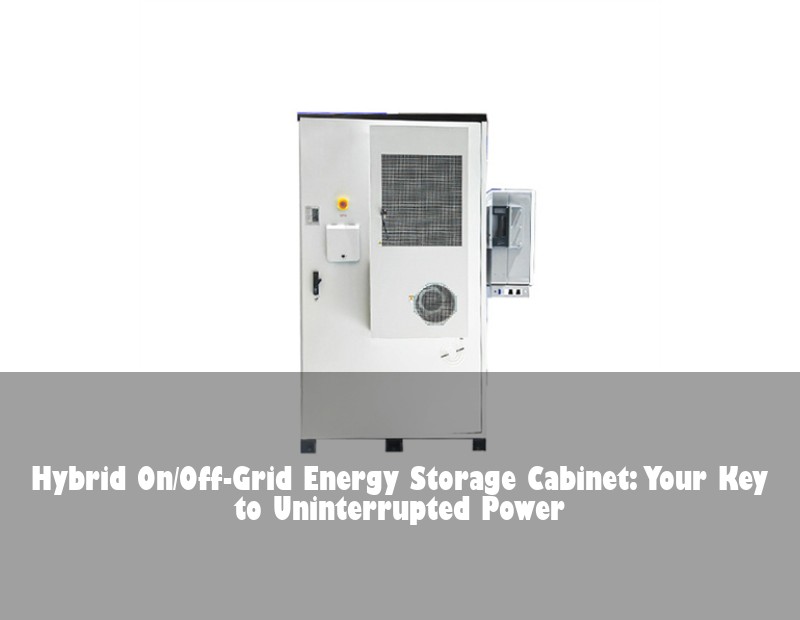
Table of Contents
- The Rising Demand for Energy Resilience
- Understanding Hybrid On/Off-Grid Systems
- How the Hybrid Energy Storage Cabinet Works
- Real-World Application: A Case Study from Germany
- Key Features and Technological Innovations
- Why Europe is Leading the Adoption
- Future Trends in Energy Storage
- Your Next Step Towards Energy Independence
The Rising Demand for Energy Resilience
Imagine this: A severe storm knocks out power across your region. While neighbors scramble in darkness, your home hums with light and warmth. This isn't science fiction—it's the reality enabled by hybrid on/off-grid energy storage cabinets. Across Europe, extreme weather events have increased by 42% in the past decade (European Environment Agency), driving homeowners and businesses toward self-reliant energy solutions. These systems represent the convergence of grid security and renewable independence.
Understanding Hybrid On/Off-Grid Systems
Unlike traditional setups, hybrid cabinets intelligently switch between three modes:
- Grid-Tied Mode: Draws power from the utility grid while storing solar surplus
- Off-Grid Mode: Operates autonomously during outages using stored energy
- Hybrid Mode: Optimizes energy costs by using batteries during peak tariff hours
This flexibility solves the "all-or-nothing" dilemma of conventional systems. As one Bavarian engineer told me: "It's like having an energy Swiss Army knife—always ready for whatever the grid throws at you."
How the Hybrid Energy Storage Cabinet Works
The magic lies in its layered architecture. Solar panels feed DC power to the cabinet, where a bidirectional inverter converts it for household use. The system's brain—an AI-driven controller—constantly analyzes:
- Grid stability metrics
- Weather forecasts
- Energy consumption patterns
- Electricity pricing fluctuations
When sensors detect grid instability, it transitions to off-grid mode in under 20 milliseconds—faster than a human blink. This seamless handoff prevents disruptions to sensitive equipment like medical devices or servers.
Real-World Application: A Case Study from Germany
Consider the Müller dairy farm in Schleswig-Holstein. After suffering €18,000 in milk spoilage losses during a 2022 grid outage, they installed a 40kWh hybrid cabinet paired with 25kW solar panels. The results?
- Zero production interruptions during 3 subsequent grid failures
- 68% reduction in energy bills through peak shaving
- Full ROI achieved in 4.2 years
"The system paid for itself during the 2023 winter storms," says owner Klaus Müller. "We even powered neighboring farms during the crisis." This mirrors broader trends—Germany's residential storage installations grew 78% year-on-year in 2023 (German Solar Association).
Key Features and Technological Innovations
Modern cabinets like Solar Pro's H-ES Series incorporate breakthrough technologies:
- Modular Battery Design: Scale capacity from 10kWh to 100kWh as needs evolve
- FireSafe™ Technology: Ceramic separators that prevent thermal runaway
- WeatherArmor™ Enclosure: IP65-rated protection for harsh climates
- Virtual Power Plant (VPP) Integration: Sell excess power to grids during demand spikes
These innovations address critical European concerns—from Alpine snow loads to Mediterranean heatwaves. The modularity particularly resonates in countries like Sweden, where homeowners gradually expand systems as EV adoption increases.
Why Europe is Leading the Adoption
Europe's perfect storm of conditions drives hybrid storage adoption:
- Average electricity prices exceeding €0.30/kWh in Germany and Denmark
- EU mandates requiring new buildings to integrate solar+storage by 2025
- Government subsidies covering up to 40% of installation costs
Spain exemplifies this shift. After eliminating the "sun tax" in 2018, residential storage deployments surged by 200%. The European Commission now projects 100GWh of new storage capacity by 2027—enough to power 8 million homes.
Future Trends in Energy Storage
The next evolution involves AI-driven predictive optimization. Imagine cabinets that:
- Pre-charge batteries before predicted storms using weather APIs
- Automatically participate in grid-balancing markets
- Integrate with EV chargers for bidirectional energy flow
Solid-state batteries will soon boost energy density by 40% while reducing costs. As Dr. Elena Rossi of Milan Polytechnic notes: "We're transitioning from passive storage to intelligent energy ecosystems."
Your Next Step Towards Energy Independence
Ready to explore how a hybrid cabinet could transform your energy profile? Consider these questions:
- What critical systems must remain operational during outages?
- How might time-of-use tariffs impact your electricity costs?
- Could your property accommodate expandable battery modules?
What's the first application you would prioritize—emergency backup, cost savings, or carbon reduction?
 Inquiry
 Online Chat