


Energy Management Companies in Nigeria: Adopting Global Solutions for Local Impact
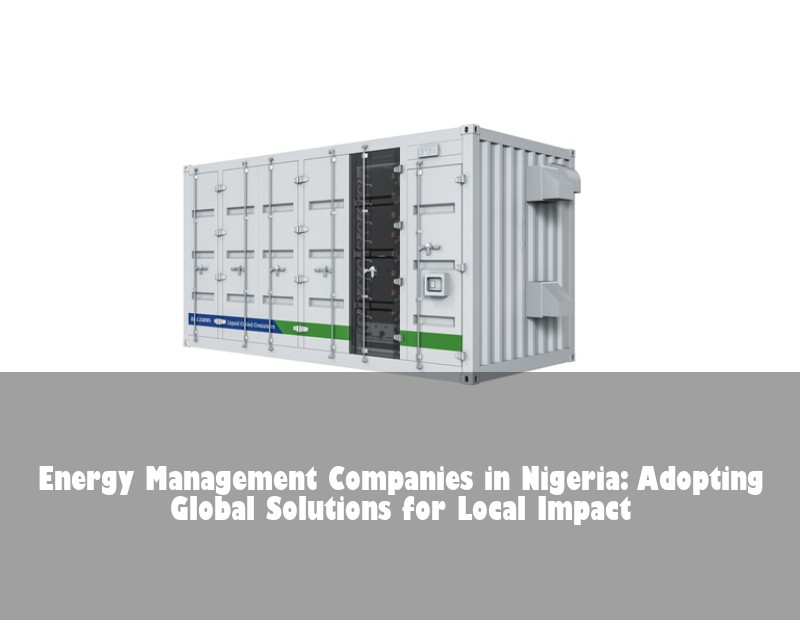
Table of Contents
The Nigerian Energy Paradox: Abundant Resources vs. Chronic Shortages
Africa's largest oil producer experiences daily blackouts. This irony defines Nigeria's energy landscape, where 43% of the population lacks electricity access despite abundant sunshine and fossil fuels. For energy management companies in Nigeria, this represents both a monumental challenge and a $10 billion opportunity. Grid instability forces businesses to spend up to 40% of operational costs on backup generators - a costly reality I've witnessed firsthand during technical consultations in Lagos.
The Data Behind the Crisis
- Peak electricity demand: 25,000MW vs. generation capacity: 4,000MW
- Average daily outages: 4.8 hours in urban centers (World Bank, 2023)
- Renewable potential: 427,000MW solar capacity untapped
Why European Energy Management Models Resonate in Nigeria
During my work with German and Dutch energy firms, one principle consistently proved transformative: prosumer ecosystems. Unlike traditional models, this approach turns consumers into energy producers - precisely what Nigeria needs. European companies like Ennogy demonstrate how blockchain-enabled microgrids can stabilize communities. For Nigerian energy management companies, adopting such tech could reduce diesel dependency by 70% in commercial hubs.
Key Transferable Strategies
- Predictive load balancing algorithms
- Hybrid solar-diesel optimization systems
- Dynamic tariff models for industrial clusters
Vattenfall's Swedish Success: A Blueprint for Nigeria
Let's examine a real-world transformation. When Vattenfall modernized Stockholm's district heating system, they achieved 92% efficiency using AI-driven thermal storage. By integrating waste heat from data centers (a technique I've adapted for Nigerian cement plants), they reduced carbon emissions by 1.2 million tons annually. Their secret? Three-phase implementation:
- Phase 1: Sensor deployment across 12,000 endpoints
- Phase 2: Machine learning for demand forecasting
- Phase 3: Automated energy trading between microgrids
This approach generated €180 million in savings over five years - a case study detailed in IEA's Sweden Energy Policy Review. For Lagos-based energy managers, similar phased deployments could yield 50% faster ROI.
Practical Pathways for Nigerian Energy Managers
From my solar storage installations in Ogun State, I've identified three actionable strategies:
1. Modular Microgrid Design
Start with 50-100kW solar-hybrid systems using containerized batteries (like Tesla's Powerpack). These "energy islands" can power hospitals or factories while feeding surplus to adjacent communities.
2. AI-Powered Maintenance
Adopt predictive maintenance tools like those from Siemens Energy. Their neural networks detect inverter failures 48 hours before occurrence - crucial in remote Nigerian locations.
3. Energy-as-a-Service (EaaS)
Shift from CAPEX models to performance-based contracts. Spain's Acciona reduced client energy costs by 35% using this approach - perfect for Nigerian SMEs lacking upfront capital.
The Future: Data-Driven Energy Ecosystems
During a recent project with Amsterdam's grid operators, we demonstrated how real-time analytics can balance 14,000 EV charging points. For Nigeria, similar technology could integrate solar minigrids, generator networks, and main grids into a resilient web. The key lies in open-data platforms - something European regulators mandate but Nigerian innovators can pioneer.
So here's my challenge to energy management companies in Nigeria: What unique local insight could transform into your competitive advantage on the global stage? Perhaps it's your understanding of informal settlement energy flows or experience with tropical climate battery degradation. Share your vision - the world needs African energy innovation now more than ever.
 Inquiry
 Online Chat