


Electrochemical Energy Storage: The Missing Link in Europe's Clean Energy Transition
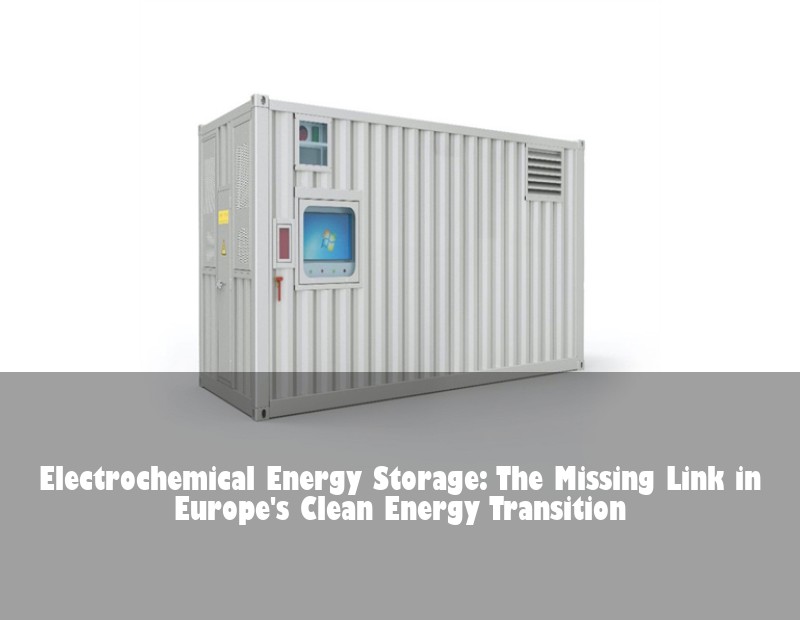
As Europe races toward its 2030 renewable targets, grid operators face a critical challenge: How to harness solar and wind energy when the sun doesn't shine and winds go still? The answer lies in electrochemical energy storage - the technological catalyst transforming intermittent renewables into reliable power assets. These systems don't just store electrons; they unlock grid flexibility, prevent wasted clean energy, and fundamentally redefine our relationship with renewable power.
The Renewable Energy Paradox: Why Power Intermittency Threatens Europe's Green Goals
Europe's renewable energy capacity has grown explosively, with solar installations increasing 40% year-over-year. Yet this success creates operational headaches:
- Grid operators must constantly balance variable generation with fixed demand
- Over 6.4 TWh of wind/solar energy was curtailed across Europe in 2022 due to lack of storage
- Frequency fluctuations exceeding ±0.5 Hz now occur 3x more frequently than in 2015
"We're essentially trying to pour water into a cup that keeps changing size," remarks Dr. Elena Rossi, Grid Operations Director at ENTSO-E. "Without storage buffers, we're forced to throttle clean energy production during peak generation."
Real-World Impact: German Grid Instability Reveals Hidden Costs
Northern Germany's Schleswig-Holstein region provides a cautionary tale. Despite generating 160% of its needs from renewables at peak times:
- Negative electricity prices occurred during 186 hours in Q1 2023 alone
- Grid congestion management costs reached €1.4 billion annually
- Wind farms were forced to shut down 8% of potential generation hours
The turning point came with the Energiepark Jardelund project. This 48MW/50MWh lithium-ion storage facility deployed across former agricultural land has delivered striking results:
- Reduced grid stabilization costs by €12.7 million in first 18 months
- Cut renewable curtailment by 22% within its service area
- Provided 250ms response to frequency drops - 60x faster than thermal plants
Project data from Fraunhofer ISE reveals the installation achieved 92% round-trip efficiency, dispelling myths about energy losses in storage systems.
How Electrochemical Energy Storage Works: Beyond Basic Batteries
Today's systems are far more sophisticated than simple battery packs. Modern electrochemical storage solutions operate through controlled redox reactions:
Core Components in Grid-Scale Systems
- Cell Stack Architecture: Series-connected modules enabling voltage scalability
- Active Thermal Management: Liquid-cooled systems maintaining 25±3°C optimal range
- Advanced Battery Management (BMS): AI-driven algorithms balancing state-of-charge across 20,000+ cells
"Think of it as a chemical orchestra," explains Dr. Henrik Schmidt of Energy Storage News. "Lithium-ions shuttle between cathodes and anodes while electrolyte solutions conduct ions - all precisely controlled at millisecond intervals."
Transformative Applications Across European Energy Sectors
Utility-Scale: The Grid Stabilization Revolution
National Grid UK's stability enhancement project deployed 201MW of distributed storage with remarkable outcomes:
- Reduced frequency response costs by £132 million annually
- Enabled 1.2GW additional renewable connections
- Provided synthetic inertia compensating for retiring coal plants
Commercial: Behind-the-Meter Economic Advantage
Swedish manufacturer Volvo Trucks implemented 4.2MWh storage at their Ghent facility:
- Reduced peak demand charges by 34%
- Created €380,000 annual savings through energy arbitrage
- Provided 12 hours backup power for critical manufacturing lines
"The payback period surprised everyone - under 4 years," states facility manager Lars Johansson. "We're now expanding to all European plants."
Frontier Innovations: Solid-State Batteries and Flow Battery Breakthroughs
Laboratory advances promise transformative performance leaps:
Emerging Technology Pipeline
- Solid-State Lithium-Metal: 420Wh/kg prototypes (2x current density) with 15-minute ultra-fast charging
- Organic Flow Batteries: 8-hour duration systems using biodegradable electrolytes
- Sodium-Ion Grid Storage: Raw material cost reductions up to 30% versus lithium solutions
Cambridge University's recent breakthrough in zinc-air batteries demonstrated 1500+ cycles with <1% degradation - potentially solving long-duration storage challenges.
What Will Your Energy Transformation Look Like?
As European nations implement the EU Battery Regulation mandating 80% recycled content by 2030, electrochemical storage evolves from technical solution to strategic imperative. With utilities across Italy, Spain, and France now offering storage-specific feed-in tariffs, the economic equation shifts daily. The question isn't whether to deploy electrochemical storage, but how quickly your organization can integrate it into your energy infrastructure. What renewable energy barriers will you dismantle first with electrochemical energy storage?
 Inquiry
 Online Chat