


Unlock Energy Freedom: Your Complete Guide to Electricity Production at Home
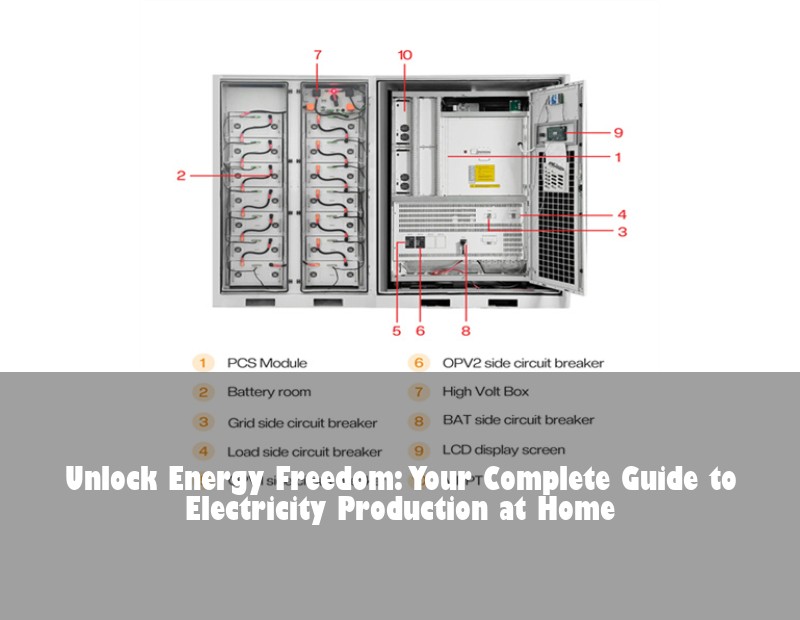
Table of Contents
- The Home Energy Revolution
- Why Europe Needs Home Electricity Production Now
- The Solar Equation: Costs vs. Returns
- Real-World Success: A German Family's Journey
- Beyond Savings: The Unseen Benefits
- Your Home as a Power Plant: What's Next?
Imagine opening your electricity bill with a smile instead of dread. Across Europe, a quiet revolution is transforming rooftops into power stations as homeowners discover the liberation of electricity production at home. Unlike traditional energy dependence, this isn't just about saving euros—it's about reclaiming control over your most fundamental resource.
Why Europe Needs Home Electricity Production Now
The energy landscape has shifted dramatically. In 2022 alone, European household electricity prices surged by 30-65% across major economies (Eurostat). But this isn't just about volatile pricing—it's about vulnerability. When you rely solely on the grid, you're at the mercy of geopolitical tensions, infrastructure failures, and fluctuating wholesale markets. Home energy production changes this dynamic fundamentally.
The Solar Equation: Costs vs. Returns
Let's break down the economics. A typical 6kW solar installation in France costs €9,000-€12,000 after subsidies. But here's what most homeowners miss: modern systems aren't just producers, they're intelligent energy managers. With battery storage, you can:
- Store surplus solar energy for nighttime use
- Sell excess back to the grid during peak pricing
- Maintain power during outages (critical in regions with aging infrastructure)
Industry data reveals compelling patterns: homeowners with solar-plus-storage systems typically achieve 60-90% grid independence, reducing payback periods to 6-8 years in sunny Mediterranean regions and 8-12 years in Northern Europe (Fraunhofer ISE source).
Real-World Success: A German Family's Journey
The Schneider family in Bavaria transformed their century-old farmhouse into an energy-positive hub. Their setup:
- 24 solar panels (8.2 kW capacity)
- 10 kWh lithium-ion battery
- Smart energy router syncing with local utility pricing
Results after 18 months? They've reduced grid dependence by 82%, with their system generating 9,200 kWh annually—enough to power their home and charge their EV. During last winter's price spikes, their smart system automatically sold surplus at €0.48/kWh while buying grid power at €0.22/kWh during off-peak hours. "Our energy bill is negative most months," says Thomas Schneider. "We're essentially being paid to consume our own energy."
Why This Works in Europe
Three continent-specific advantages make this ideal:
- Net Metering Policies: Feed-in tariffs like Italy's Scambio sul Posto guarantee fair compensation
- Diverse Climate Adaptability: Modern panels generate power even on cloudy UK days
- EU-Wide Standards: CENELEC certifications ensure plug-and-play compatibility (European Commission source)
Beyond Savings: The Unseen Benefits
While financial returns grab headlines, the true value of home electricity production lies deeper. Consider these often-overlooked advantages:
Energy Security as Self-Determination
During the 2021 Texas grid collapse, solar-powered homes maintained power. Similarly, European households with battery buffers become resilient during storms or supply disruptions. This isn't hypothetical—Spanish homeowners reported zero downtime during recent heatwaves thanks to their solar-storage systems (IDAE source).
The Carbon Calculus
A typical UK home solar installation offsets 1.3 tonnes of CO₂ annually—equivalent to planting 650 trees. But modern systems add smart layers: by syncing with grid carbon intensity data (available via APIs like Electricity Maps), your system can automatically:
- Charge batteries when grid renewables peak
- Discharge during high-fossil-fuel periods
- Optimize for both cost and emissions
Your Home as a Power Plant: What's Next?
The frontier of home electricity production is evolving rapidly. Vehicle-to-Grid (V2G) technology now allows your EV battery to power your home during outages or sell energy back at peak rates. Meanwhile, AI-driven platforms like those from Sonnen and Tesla can predict your energy patterns based on weather forecasts and your calendar.
The Community Dimension
In Denmark's Samsø Island, neighbors trade solar power via blockchain-enabled microgrids. This model—where your excess energy powers the local school or bakery—demonstrates how individual systems collectively transform communities.
Your Next Step
Solar technology has moved beyond niche experimentation. With pan-European certifications like the Solar Keymark and streamlined permitting processes across the EU, there's never been lower barriers to energy independence. But I'm curious—what's your biggest hesitation about starting your home electricity production journey? Is it the upfront investment, concerns about your roof's suitability, or uncertainty about maintenance?
 Inquiry
 Online Chat