


Revolutionizing Renewable Energy: The Rise of DC Power Distribution Systems
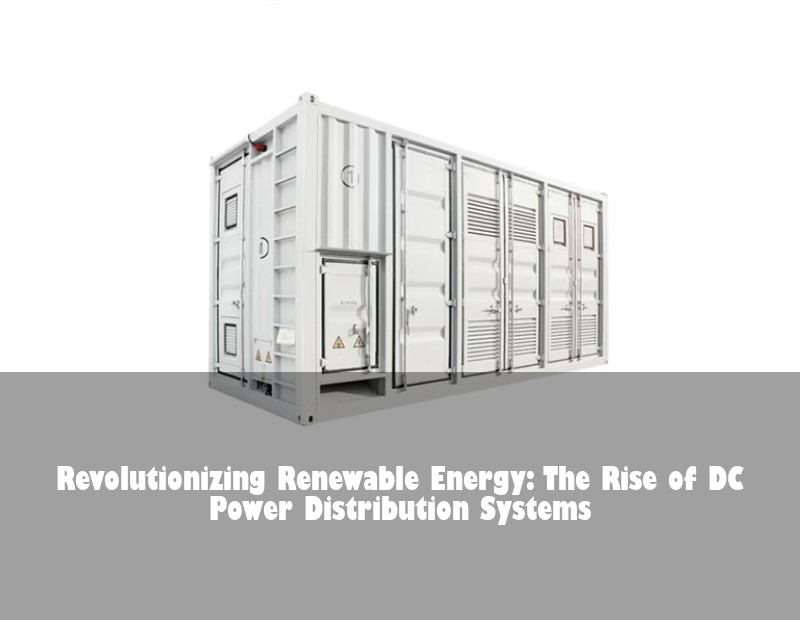
As Europe accelerates its clean energy transition, a silent revolution is unfolding in how we distribute electricity. DC power distribution systems—once confined to niche applications—now emerge as a critical solution for solar and storage integration. Let's explore why this technology is gaining global momentum.
Table of Contents
- The Hidden Inefficiency in Modern Energy Grids
- DC vs. AC: What the Numbers Reveal
- Amsterdam's Solar-Powered Neighborhood: A Blueprint for Europe
- Building Blocks of a Modern DC Power Distribution System
- Where Do We Go From Here? The DC Evolution
The Hidden Inefficiency in Modern Energy Grids
Your solar panels generate pristine DC electricity, only to lose up to 20% through conversions before reaching your devices. Why? Because our century-old AC infrastructure forces unnecessary transformations between DC sources (solar, batteries) and DC loads (LEDs, EVs, electronics). This energy "translation tax" compounds across millions of installations daily.
DC vs. AC: What the Numbers Reveal
Independent studies highlight DC's compelling advantages. According to the International Renewable Energy Agency, DC microgrids achieve 92-96% end-to-end efficiency versus 78-85% for equivalent AC systems. Consider these findings:
- Cable Loss Reduction: DC requires 30% less copper for equivalent power transfer (IEEE Transactions)
- Conversion Savings: Eliminating AC/DC stages reduces power loss by 5-7% per conversion
- Cost Impact: DC systems lower balance-of-system costs by 15% for commercial solar installations
Amsterdam's Solar-Powered Neighborhood: A Blueprint for Europe
In 2022, the EU Horizon 2020-funded "DC-Opera" project transformed Amsterdam's Schoonschip floating community. Here's what they achieved:
- 48 homes interconnected via 380V DC backbone
- Shared 500kWh battery storage with 98% round-trip efficiency
- 12% higher self-consumption of solar vs. AC counterparts
- €120,000 saved in grid infrastructure costs
"The DC system acts like a shared energy bloodstream," notes project lead Dr. Elena Rossi. "Residents trade solar power directly without conversion penalties—it's like eliminating currency exchange fees for electrons."
Building Blocks of a Modern DC Power Distribution System
Unlike traditional setups, these systems integrate key components into an efficient ecosystem:
Core Architecture
- Smart DC Hubs: Replace AC panels with solid-state circuit protection
- Bi-Directional Converters: Enable seamless battery integration
- Voltage Orchestration: Adaptive 48V/380V/1500V tiers for different loads
Game-Changing Technologies
New UL-certified DC switches eliminate arc-flash risks, while hybrid inverters serve as "energy translators" only when grid interaction occurs. As SolarPro engineer Markus Weber observes: "We're not just rewiring buildings—we're redesigning energy conversations."
Where Do We Go From Here? The DC Evolution
With the European Commission targeting 45% renewable energy by 2030, DC distribution becomes strategic infrastructure. Emerging applications include:
- Data centers leveraging native DC server power
- EV fast-charging parks fed directly from solar farms
- Industrial parks with DC-powered machinery
Yet challenges remain—standardization across voltage levels and regulatory frameworks needs urgent attention. Which brings us to you: What energy transformation challenge could DC solve in YOUR next project?
 Inquiry
 Online Chat