


Unlocking the True Cost of a 5kW Solar Battery: A European Perspective
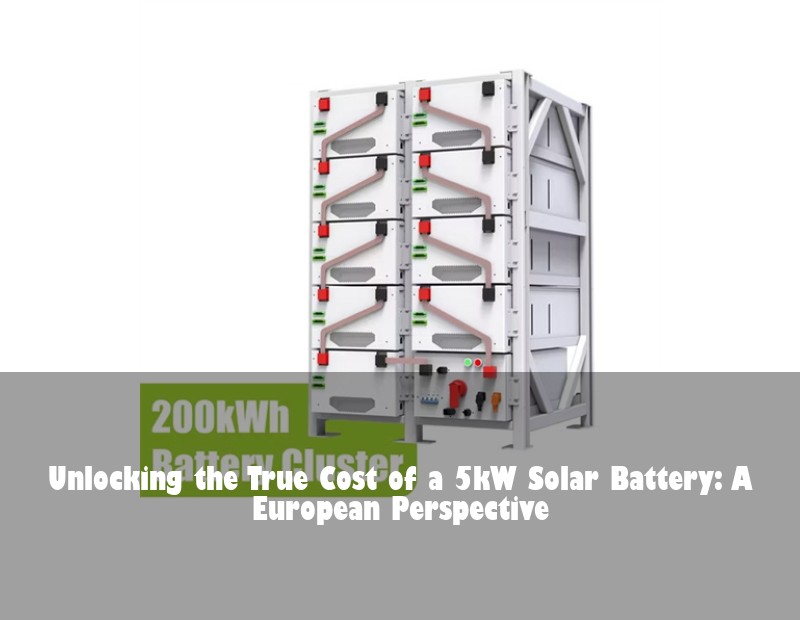
As Europe accelerates its renewable energy transition, one question echoes through households from Berlin to Barcelona: "What's the real cost of a 5kW solar battery?" This powerhouse capacity strikes the ideal balance for most European homes—offering substantial backup while staying within practical budgets. Let's demystify the investment together.
Table of Contents
Breaking Down the 5kW Solar Battery System
A 5kW solar battery isn't just a single unit—it's an ecosystem. Understanding these components helps explain why costs vary:
- The battery core (5kWh capacity)
- Hybrid inverter for solar-battery handshake
- Professional installation including safety systems
- Grid connection approvals and certifications
Ever noticed how two identical battery units can have wildly different quotes? That's because installation complexity and local regulations significantly impact your bottom line.
Key Factors Driving Your Investment
Technology Matters: Chemistry vs. Cost
Lithium iron phosphate (LFP) dominates Europe's 5kW market—offering 6,000+ cycles at €800-€1,200/kWh. Compare this to fading lead-acid alternatives at €500/kWh but half the lifespan. Quality has a price, but it pays dividends.
The Regional Price Puzzle
Why does a German install cost 20% more than a Spanish one? Labor rates and subsidy structures create fascinating regional disparities. In 2023, average installed costs for 5kW systems ranged from:
- UK: £5,200-£6,500 (after VAT)
- Italy: €6,000-€7,300 with Ecobonus
- Sweden: 65,000-80,000 SEK (high winterization needs)
Pro tip: Always request itemized quotes. That "mystery fee" could be your region's mandatory grid-compliance testing!
Real-World Case: German Household Transformation
Let's examine the Müller family near Munich—a textbook example of smart 5kW investment:
- System: Huawei Luna 5kW LFP + hybrid inverter
- Cost: €6,900 installed (pre-subsidy)
- Subsidy: €2,070 via BAFA rebate
- Energy Independence: 78% average self-consumption
- Payback: 6.2 years (calculated with Fraunhofer ISE data)
Their secret? Pairing the battery with time-of-use tariffs—earning €290/year by selling stored energy during peak pricing. This isn't just backup power; it's an income stream.
Beyond the Price Tag: Lifetime Value Analysis
Viewing your 5kW battery through a 10-year lens reveals hidden economics. Consider these operational advantages:
- Reduced grid dependence: 60-80% lower peak tariff exposure
- Extended PV ROI: Solar self-consumption boosts 40-60%
- Resilience value: Power security during outages (priceless in storm-prone regions)
When IEA projects 25% annual battery cost declines, why wait? Current subsidies like Italy's 110% Superbonus create unprecedented value windows—but they're closing fast.
Choosing Your Perfect 5kW Companion
Future-Proofing Checklist
- Modularity: Can you add capacity later?
- Software: Does it integrate with dynamic pricing?
- Warranty: 10-year coverage is now industry standard
Installation Red Flags
Beware suspiciously low quotes! They often indicate:
- Non-certified equipment
- Omitted safety disconnects
- Lack of grid-connection paperwork
Remember Johannes from Copenhagen? He saved €800 upfront but paid €2,200 in grid-compliance retrofits. Certified installers are non-negotiable.
Your Next Smart Move
With European electricity prices soaring 30% since 2021, isn't it time you turned your energy bills into a strategic asset? What energy independence milestone will your household reach this year?
 Inquiry
 Online Chat