


Converted Shipping Containers: Revolutionizing Mobile Solar Energy Storage
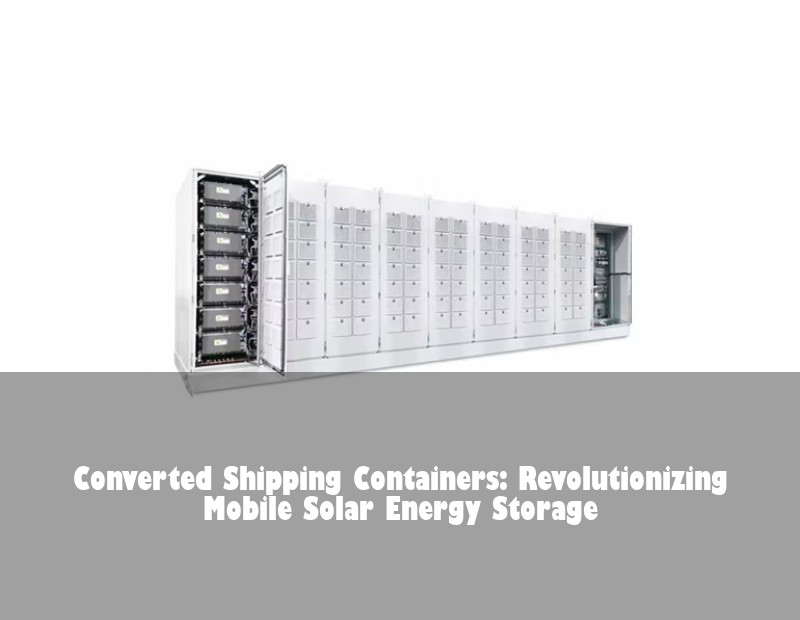
Table of Contents
The Challenge: Static Energy in a Dynamic World
You've secured a large construction project in Berlin, a temporary festival site in southern France, or even disaster relief operations in Greece. The site needs robust, clean power – fast. Traditional, fixed energy storage solutions? They're often too slow to deploy, too expensive to move, and frankly, too inflexible for today's dynamic needs. This rigidity creates delays, inflates costs, and limits how we leverage renewable energy. That's where a brilliantly simple yet powerful innovation steps in: converted shipping containers.
We're not just talking about stuffing batteries into a box. These are engineered powerhouses. Think of them as plug-and-play energy hubs built within the incredibly robust, standardized, and globally transportable framework of a shipping container. It's sustainability meets supreme practicality.
The Data: Why Mobility & Scalability Win
The rise of converted shipping containers isn't just a trend; it's a response driven by compelling operational and economic realities:
- Speed: Deployment time slashed by up to 70% compared to constructing fixed storage buildings.
- Cost: Utilizing existing container structures reduces upfront capital expenditure by 15-25% (source: Wood Mackenzie H2 2023 Storage Report). Modularity eliminates costly oversizing.
- Durability: ISO containers are built to withstand harsh marine environments, making them ideal for rugged temporary sites.
- Scalability: Need more power? Simply add another unit – like stacking Lego blocks for energy.
Suddenly, providing reliable, renewable power for remote locations, large-scale events, or rapidly evolving industrial sites isn't just possible; it's efficient and cost-effective.
Case Study: Rotterdam's Port - Powering Innovation with Containers
Let's look at a concrete example from the heart of European logistics: the Port of Rotterdam. Facing ambitious decarbonization goals and needing flexible power solutions for its sprawling terminals and visiting vessels, the port authority turned to converted shipping containers.
The Project: Deployment of multiple 40ft containerized battery energy storage systems (BESS), each integrating 1.2 MWh of storage capacity and advanced inverters.
The Results:
- Grid Relief: Providing 5 MW of peak shaving capacity during high-demand periods, reducing grid strain and associated fees.
- Emission Cuts: Enabling shore power for berthed vessels, eliminating over 1,200 tons of CO2 annually from auxiliary diesel engines (source: Port of Rotterdam Authority Press Release).
- Renewable Integration: Storing excess solar energy generated from on-site PV installations for use during night operations.
- Mobility: Units were strategically relocated within the port as operational needs shifted over 18 months.
"The flexibility and rapid deployability of the containerized systems were crucial," noted a Port of Rotterdam energy project manager. "They allowed us to test solutions in different locations and scale quickly without major construction."
The Tech Inside: More Than Just a Metal Box (But the Box Matters!)
So, what makes a high-performance solar storage container? It's a sophisticated integration within a proven shell:
1. The Core: Battery & Power Conversion
- Battery Chemistry: Primarily Lithium Iron Phosphate (LFP) for safety, longevity (6,000+ cycles), and wide operating temperatures – ideal for European climates.
- Inverter/Charger: High-efficiency bi-directional inverters manage grid interaction, solar input, and AC output seamlessly.
- Capacity: Typically ranging from 500 kWh to over 3 MWh per 40ft container, scalable through modular internal design.
2. The Critical Infrastructure
- Thermal Management: Precision HVAC or liquid cooling systems maintain optimal battery temperature year-round, crucial for performance and lifespan.
- Safety Systems: Multi-layered protection: advanced Battery Management Systems (BMS), gas detection, fire suppression (often aerosol-based), and comprehensive electrical isolation.
- Grid Connectivity: Equipped with switchgear and protection relays compliant with local grid codes (e.g., EN 50549 in Europe).
3. The Container Advantage
- Structural Integrity: Corrugated steel walls provide inherent strength and security.
- Weatherproofing & Corrosion Resistance: Factory-applied coatings and seals protect against rain, snow, salt spray, and dust ingress (IP54 standard or higher).
- Standardized Logistics: Easily transported globally via ship, rail, or truck using existing infrastructure. No special permits needed for the container itself.
This isn't just repurposing; it's purpose-built engineering leveraging the container's strengths while adding layers of critical technology. For a deep dive into safety standards, the DNV GL Battery Handbook remains an essential resource.
Beyond the Port: Where Your Container Could Go Next
The Rotterdam case is inspiring, but the potential of converted shipping containers stretches far beyond ports. Imagine:
- Construction Mega-Sites: Providing clean, quiet power for tower cranes, site offices, and tools, replacing diesel generators and reducing local emissions in city centers.
- Renewable Energy Farms (Temporary): Storing solar/wind output during construction before permanent grid connections are complete, maximizing ROI from day one.
- Film & Music Festivals: Powering stages, lighting, and vendor stalls sustainably, even in greenfield locations. Think Glastonbury or Tomorrowland powered by the sun, stored in a container.
- Mining & Remote Operations: Delivering reliable power in harsh, off-grid environments, reducing diesel dependency and logistics costs.
- Emergency Response: Rapidly deployable power for hospitals, communication centers, and shelters after natural disasters.
The beauty lies in the "plug, play, power, and move" paradigm. What temporary or mobile power challenge could this solve for *your* next project?
Q&A: Your Burning Questions Answered
Q: How long does it take to commission a unit on-site?
A: Significantly faster than fixed systems! Once delivered and positioned (often with a standard crane or forklift), connection and commissioning typically take 1-3 days for a trained crew. It's primarily about connecting power cables and performing safety checks.
Q: Are they really safe for urban environments?
A: Absolutely. Modern containerized BESS prioritize safety. LFP chemistry is inherently less prone to thermal runaway than older NMC. They include multiple, redundant safety systems (gas detection, suppression, thermal runaway containment). Units undergo rigorous testing (UN 38.3, IEC 62619) and comply with stringent fire safety standards like NFPA 855 or local equivalents. Placement considerations are similar to any electrical substation.
Q: What's the typical lifespan and maintenance?
A: High-quality LFP systems in a well-managed container expect 10-15 years of service or 6,000+ cycles. Maintenance is minimal compared to generators – primarily visual inspections, HVAC filter changes, and remote system monitoring. The container itself requires basic corrosion checks, especially in coastal areas.
 Inquiry
 Online Chat