


Revolutionizing Cold Storage Manufacturing with Solar Energy
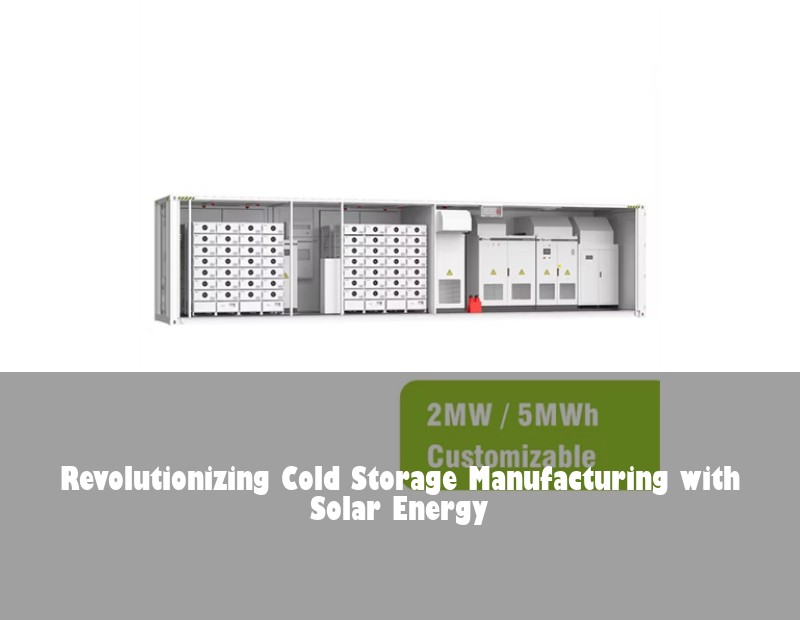
Global cold storage manufacturing faces unprecedented energy challenges, with facilities consuming up to 200 kWh/m² annually. Integrating solar + storage isn't just eco-friendly—it's becoming essential for operational resilience. This article explores how photovoltaic (PV) systems transform energy economics in cold storage manufacturing, with actionable insights from real European implementations.
Table of Contents
- The Energy Iceberg: Why Cold Storage Manufacturing Demands Change
- Crunching the Numbers: Cold Storage's Energy Drain
- Case Study: Solar-Powered Cold Chain in Germany
- Solar + Storage: Technical Integration for Sub-Zero Efficiency
- Three Game-Changing Insights for Facility Managers
- The Road Ahead: Sustainable Cold Chains in Europe
The Energy Iceberg: Why Cold Storage Manufacturing Demands Change
Imagine a -25°C facility running 24/7—refrigeration accounts for 60-70% of its operating costs. Traditional energy sources expose manufacturers to volatile pricing and grid vulnerabilities. Europe's 2022 energy crisis saw cold storage operators facing 42% higher electricity bills YoY. Can your facility absorb such shocks?
Crunching the Numbers: Cold Storage's Energy Drain
Industry data reveals critical patterns:
- Average energy consumption: 35-45 kWh/ft² annually (IRENA, 2023)
- Peak demand surcharges contribute to 30% of operational expenses
- Post-harvest food loss due to power outages costs EU €10 billion yearly
The Hidden Cost of Conventional Power
Fossil-dependent facilities face carbon taxes up to €100/ton under EU ETS—making solar not just cleaner, but economically inevitable.
Case Study: Solar-Powered Cold Chain in Germany
In 2022, Bavarian logistics giant FrostLog retrofitted their 12,000m² facility with a 1.8 MW solar array + 500 kWh lithium-ion storage. Results?
- Energy autonomy: 83% daytime operations covered by PV
- Demand charge reduction: €28,000/month saved
- ROI achieved in 4.2 years—faster than projected
Lessons Learned
Strategic battery dispatch during tariff peaks slashed costs 39%. Real-time monitoring via IoT sensors optimized compressor cycles, enhancing PV utilization.
Solar + Storage: Technical Integration for Sub-Zero Efficiency
PV systems for cold storage require specialized engineering:
System Architecture Essentials
- Bifacial panels: Capture snow-reflected light for winter gains
- DC-coupled storage: Minimizes conversion losses for constant refrigeration loads
- Predictive analytics: Forecasts production/consumption for ammonia compressor scheduling
Overcoming Implementation Hurdles
Rooftop weight limits? Modern thin-film PV adds just 2.4 kg/m². Space-constrained sites deploy vertical bifacial arrays—yielding 20% extra winter output.
Three Game-Changing Insights for Facility Managers
- Peak shaving > Net metering: Battery arbitrage during €0.38/kWh peak periods delivers 3x value of feed-in tariffs
- Thermal inertia is your ally: Pre-chilling during solar peaks maintains temperatures during grid outages
- Hybrid inverters future-proof: Modular systems allow hydrogen storage integration as regulations evolve
The Road Ahead: Sustainable Cold Chains in Europe
EU funding programs like Innovation Fund now cover 60% of solar-storage CAPEX for temperature-controlled logistics. With 500+ European cold stores exceeding 10,000m², the decarbonization potential equals 1.2 million tons CO₂/year.
Your Next Strategic Move
What energy resilience threshold does your cold chain require to meet 2030 ESG targets? Let's engineer your facility's solar transformation—contact our team for a site-specific feasibility analysis.
 Inquiry
 Online Chat