


California Energy Storage: A Global Blueprint for Renewable Integration
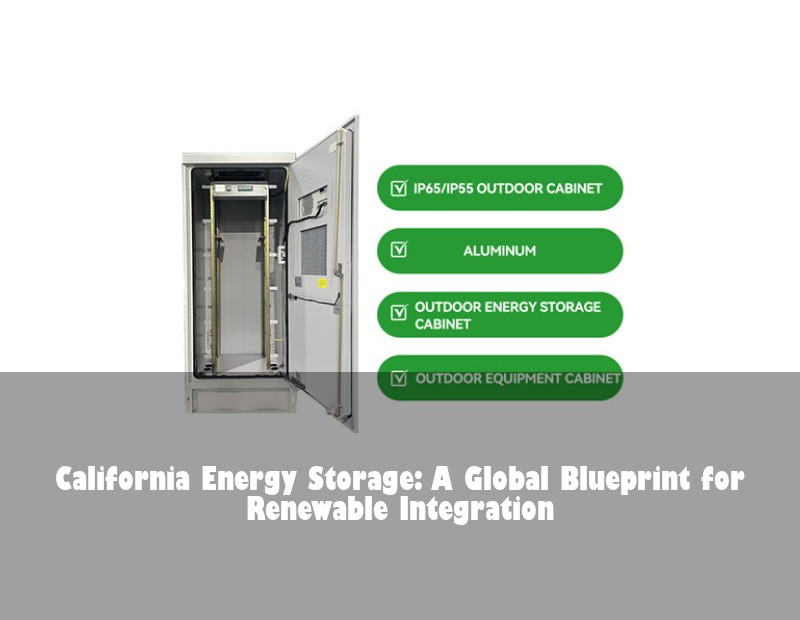
Table of Contents
California's grid operators seamlessly integrating 15+ gigawatts of solar power daily while Europe faces renewable curtailment challenges. What's the golden state's secret? California energy storage deployments aren't just local solutions - they're becoming global case studies. As Europe accelerates its energy transition, these innovations offer actionable blueprints for grid resilience.
The Intermittency Challenge: Why Storage Matters
Renewable energy's Achilles' heel remains its intermittency. When German wind generation dropped 40% during Q1 2023's "dunkelflaute" (dark doldrums), operators faced grid strain. California experienced similar pain points:
- Over 600 GWh of solar energy curtailed in 2022 due to midday oversupply
- Evening ramps requiring 13+ GW of fossil backups pre-storage
- Frequency fluctuations exceeding 0.5 Hz during solar drop-off
Sound familiar? These aren't regional quirks - they're universal renewable integration hurdles. As one Amsterdam grid engineer told me: "We're solving yesterday's California problems today."
California's Storage Revolution: By the Numbers
California didn't just adopt storage; it reengineered its grid architecture around it. The results? A masterclass in renewable optimization:
The Duck Curve Tamed
Remember when that steep evening demand ramp kept utilities awake? Storage flattened it dramatically. In 2023 alone:
- 2.4 GW/8.6 GWh of new battery capacity came online
- 94% solar curtailment reduction during peak generation hours
- $288 million in congestion cost savings (CAISO, 2023)
Policy-Driven Acceleration
California's storage mandate (AB 2514) required utilities to deploy 1.3 GW by 2024. They smashed that target by 162%! The lesson? Regulatory frameworks must lead. As Dr. Elena Schmidt at California Energy Commission notes: "Storage isn't ancillary - it's foundational infrastructure."
European Lessons: Germany's Speicher Initiative
Let's cross the Atlantic. Bavaria's energy cooperative proves California's model translates beautifully to European contexts. Their 2022 "Speicher Initiative" deployed:
Project Highlights
- 48 MWh community battery network across 9 villages
- Paired with existing solar/wind assets
- 73% self-consumption rate (vs. 34% pre-deployment)
The real win? Financial resilience. By avoiding peak tariffs and participating in primary control reserve markets, the cooperative achieved 11-year ROI - 3 years faster than projected. "California's frequency regulation protocols were our playbook," admits project lead Markus Weber.
Beyond Batteries: Next-Gen Storage Technologies
While lithium-ion dominates headlines, California's R&D pipeline reveals exciting alternatives:
Thermal Storage Breakthroughs
Companies like Malta Inc (spun from Google X) are piloting molten salt systems that store electricity as heat for days, not hours. Their 100 MW demonstration plant near Fresno achieves 60% round-trip efficiency at half lithium's $/kWh.
Virtual Power Plants (VPPs)
Sunrun's California VPP aggregates 15,000+ home batteries into a 300 MW dispatchable resource. This isn't sci-fi - it's operational today, proving distributed assets can match traditional plants.
Your Storage Roadmap: Where to Start
Ready to harness these innovations? Consider these actionable steps:
- Phase 1: Conduct a "California Gap Analysis" - map your grid's pain points against CAISO's historical data
- Phase 2: Pilot behind-the-meter storage at commercial sites (retrofit existing solar)
- Phase 3: Engage regulators with California's policy templates
As you evaluate technologies, ask yourself: What unique grid constraints could turn storage from cost center to revenue generator? The answer might just redefine your energy future.
 Inquiry
 Online Chat