


Unlock Energy Independence: Why Your Solar Panels Need a Battery System
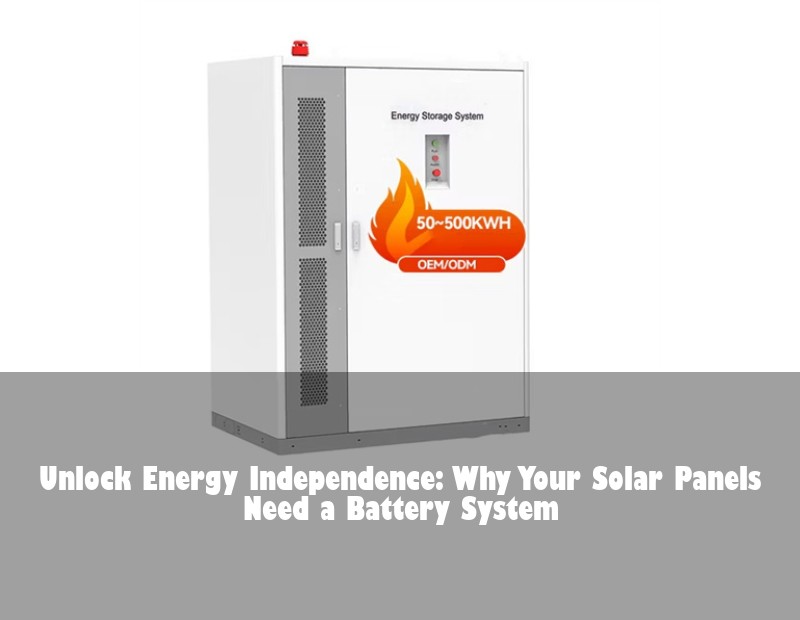
Table of Contents
- The Silent Energy Drain: Solar's Untapped Potential
- How Battery Systems Transform Solar from Daylight Solution to 24/7 Powerhouse
- Real Impact in Europe: A German Case Study
- Choosing Your Battery System: Key Technical Considerations
- Beyond Storage: The Grid-Stabilizing Superpower of Solar Batteries
- Your Next Step: Questions to Energize Your Decision
The Silent Energy Drain: Solar's Untapped Potential
Your solar panels are generating clean energy while the sun shines, but as evening falls, you're forced to buy electricity from the grid. Across Europe, millions of solar-equipped homes face this daily paradox. Solar production peaks at midday, yet household demand soars during breakfast and evening hours. This mismatch creates what we call "solar spillover" - excess energy vanishing unused into the grid. Without a battery system for solar panels, up to 60% of self-generated power may never benefit your home, according to EU energy data repositories.
The Ripple Effect of Uncaptured Energy
When solar installations lack storage, three critical problems emerge:
- Financial leakage: UK homeowners lose £240-£400 annually selling surplus at low rates only to repurchase at peak tariffs
- Grid vulnerability: German networks saw 12% more stabilization costs in 2022 due to solar intermittency
- Carbon footprint paradox: Dutch studies show unused solar extends reliance on fossil-fuel peaker plants
How Battery Systems Transform Solar from Daylight Solution to 24/7 Powerhouse
Enter the game-changer: modern lithium-ion battery systems for solar panels. These aren't mere backup units; they're intelligent energy managers. During daylight, surplus solar charges the batteries instead of feeding the grid. At night or during outages, your home draws from this reserve. The magic happens through advanced inverters that manage the energy flow in milliseconds, creating a self-sustaining microgrid on your property.
Technical Advantages You Can Measure
Modern systems deliver:
- 90-95% round-trip efficiency (vs. 70-80% for older tech)
- 10-15 year lifespans with 10,000+ charge cycles
- Scalable capacity from 5kWh (apartment-friendly) to 20kWh+ (whole-home coverage)
Real Impact in Europe: A German Case Study
Let's examine the Röders family near Hamburg. After installing a 9.8kWh battery with their 8kW solar array in 2021, their results were striking:
- Grid dependence reduced from 78% to 29% annually
- Electricity bills cut by €1,200/year despite Germany's 2022 price surge
- Self-consumption jumped from 38% to 89% - verified by Fraunhofer Institute monitoring
This mirrors broader trends. According to SolarPower Europe, German households with solar batteries achieve 70-90% energy autonomy versus 30-40% for battery-less systems. When blackouts hit Bavaria during 2023 storms, battery-equipped homes maintained power for 8-12 hours - critical during emergency events.
Choosing Your Battery System: Key Technical Considerations
Selecting the right battery system for solar panels involves more than capacity. As a Solar Pro technical specialist, I advise evaluating:
Performance Metrics That Matter
- Depth of Discharge (DoD): Opt for 90%+ DoD (e.g., Tesla Powerwall) vs older 50-60% models
- Cycling Stability: Look for <10% capacity degradation after 5,000 cycles
- Climate Adaptability: Nordic buyers should verify -20°C operation ratings
Compatibility Checklist
Ensure your system integrates with:
- Existing solar inverters (hybrid models recommended)
- Energy management apps (like SolarEdge or Sonnen)
- Future expansion ports for additional batteries
Beyond Storage: The Grid-Stabilizing Superpower of Solar Batteries
Your battery's impact extends beyond your meter box. Virtual power plants (VPPs) now aggregate thousands of residential batteries across Europe. During the 2022 energy crisis, UK VPPs delivered 1.2GW of stability services to the National Grid - equivalent to a nuclear reactor! By participating in programs like Octopus Energy's Power Loop, homeowners earn €200-€500 annually while reinforcing the grid.
The Intelligent Grid of Tomorrow
With bidirectional charging emerging (V2H technology), your future EV could power your home during outages. Innovations like dynamic tariff response automatically discharge batteries when electricity prices peak, maximizing ROI. We're transitioning from passive consumption to active energy citizenship.
Your Next Step: Questions to Energize Your Decision
As Europe accelerates toward 2030 renewable targets, one truth emerges: solar panels alone are half the solution. The real transformation begins when you add intelligence through storage. So let me ask you: What energy independence milestone could a battery system for solar panels help your household achieve this year?
 Inquiry
 Online Chat