


Battery Banks for Wind Turbines: Unlocking Reliable Renewable Energy
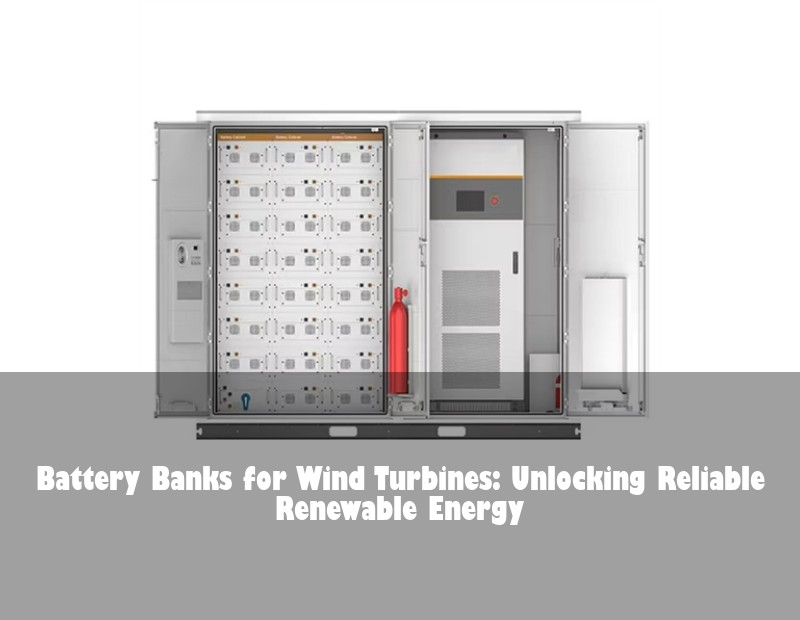
It's 3 AM on a windy night in the North Sea. Your turbines are spinning at full capacity, but regional energy demand has plummeted. Without battery banks for wind turbines, this clean energy goes to waste—a scenario playing out across Europe's wind farms daily. As wind energy dominates Europe's renewable landscape (supplying 17% of EU electricity), the missing piece isn't generation capacity—it's intelligent storage. This article explores how battery banks transform wind from an intermittent source to a grid-stabilizing powerhouse.
Table of Contents
- The Intermittency Challenge in Wind Energy
- Europe's Wind Curtailment Crisis: By the Numbers
- German Success Story: The Kassel Wind-Battery Project
- How Battery Banks Solve Wind's Core Limitations
- Choosing Your Battery Bank: Key Technical Considerations
The Intermittency Challenge in Wind Energy
Wind's unpredictability creates operational headaches. When gusts exceed grid capacity or demand drops, turbines disconnect—a process called curtailment. Ever wonder why your wind farm's production dashboard shows jagged peaks and valleys? That's intermittency in action. Without storage, you're forced to:
- Sell excess energy at negative prices during low demand
- Rely on fossil-fuel backups during calm periods
- Miss grid service revenue opportunities
Europe's Wind Curtailment Crisis: By the Numbers
The data paints a stark picture. In 2023 alone:
- Germany curtailed 6.8 TWh of wind energy (IRENA)
- UK offshore wind farms wasted energy equivalent to powering 800,000 homes annually
- Spain saw 9% of potential wind generation go unused
Why does this happen? Grid infrastructure can't absorb sudden surges, and traditional markets lack real-time flexibility. But here's what surprised us: During curtailment events, spot electricity prices often plunge below €-30/MWh—meaning operators literally pay to offload energy.
German Success Story: The Kassel Wind-Battery Project
Let's examine a real-world solution in Hesse, Germany. The Kassel Wind Farm integrated a 48 MWh lithium-ion battery bank with their 120 MW turbines. Results after 18 months:
- 94% reduction in curtailment losses
- €2.3 million annual revenue from frequency regulation services
- Extended turbine lifespan by reducing abrupt shutdowns
"The battery acts like a shock absorber," explains project lead Anja Weber. "When grid operators signal congestion, we store within milliseconds—no more wasted megawatts." This aligns with Germany's Fraunhofer Institute findings showing battery-attached wind farms achieve 22% higher ROI.
How Battery Banks Solve Wind's Core Limitations
Think of battery banks as your wind farm's "energy manager." They perform four critical functions:
- Energy Shifting: Store surplus night wind for morning demand peaks
- Grid Stabilization: Inject power during voltage dips (within 100ms)
- Curtailment Mitigation: Capture 98% of otherwise lost energy
- Revenue Stacking: Unlock 4+ income streams from single assets
Modern systems like Tesla Megapack or Fluence's Gridstack use AI forecasting. By analyzing weather patterns and grid schedules, they pre-charge before expected curtailment events—like knowing tomorrow's wind speeds today.
Choosing Your Battery Bank: Key Technical Considerations
Not all batteries suit wind applications. Ask these questions when selecting systems:
- Response Time: Can it react within 500ms to grid signals? (LFP chemistry excels here)
- Cycling Capability: Will it withstand 7,000+ deep cycles without degradation?
- Scalability: Can modules be added as your wind farm expands?
- Thermal Management: Does it maintain efficiency at -20°C Scandinavian temperatures?
We recommend independent cycling tests like those from DNV GL. Their 2023 report revealed top-tier systems retain >90% capacity after 10 years under wind farm conditions.
What's Your Biggest Wind Energy Storage Challenge?
Europe's energy transition needs solutions now. If you're evaluating battery banks, what technical or economic hurdle keeps you awake at night? Share your scenario—we'll suggest tailored approaches.
 Inquiry
 Online Chat